

DISPATCHES
December 2025
Hi Guys,My goodness, where did this year go..? Suddenly, it’s December and Christmas will all too soon be upon us!
As usual for December, not too many releases but still some very useful and welcome ‘Stocking Stuffers’ for a few of our series – particularly in the 18th and 19th Centuries.
Let's get started…
1. BEING RELEASED THIS MONTH
A. A Welcome Addition for the General’s Lifeguard Regiment.
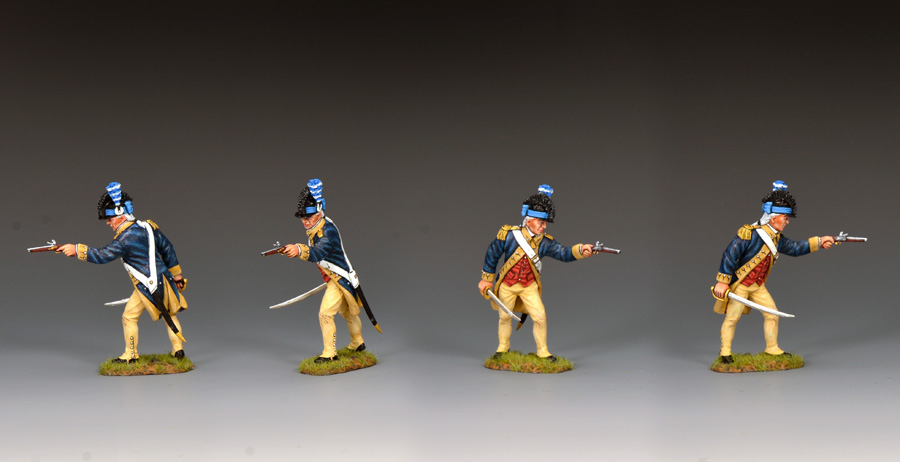
| AR083 ‘George Washington’s Bodyguard Sergeant w/Pistol and Sword Standing four-square with his men this non-commissioned officer fires his pistol at the advancing ‘Redcoats’ while also preparing to meet them with some cold steel. |
 |
AVAILABLE: Early December
B.“Colours Forward!”
On the opposite side of this Revolutionary War battle the order is given for the 4th Regiment of Foot’s colours to be brought forward to the front of the long red line of advancing British infantrymen marching towards the enemy..JPG)
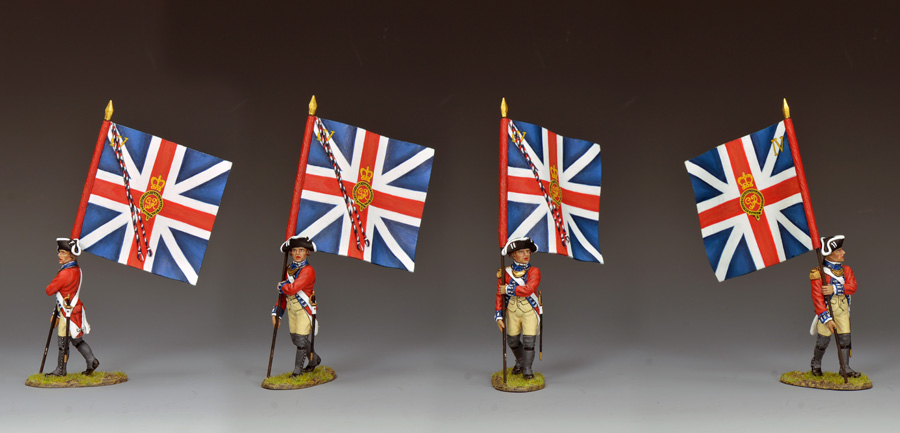
| BR104 “4TH Regiment of Foot Officer w/The King’s Colour” Beginning in 1743 it was decreed by King George Ⅱthat each British Infantry Regiment was to have as their ‘first colour’ (flag/standard) the ‘King’s Colour’ which would be a large ‘Union Jack’ as a symbol of royal allegiance. In addition in the centre of the Union Jack would be the regimental crest, in this case the monogram of the reigning Monarch (GeorgeⅢ)surmounted by a crown. Also added at this time was the number of the regiment, the latin numerals IV”, in the upper canton denoting the 4th Regiment of Foot. Over time selected battle honours were also added to the King’s Colour however at the time of the Revolutionary War the flag remained relatively unadorned except as shown. It was normal at this time for the flag to be carried by a junior company officer, usually a lieutenant. |
 |
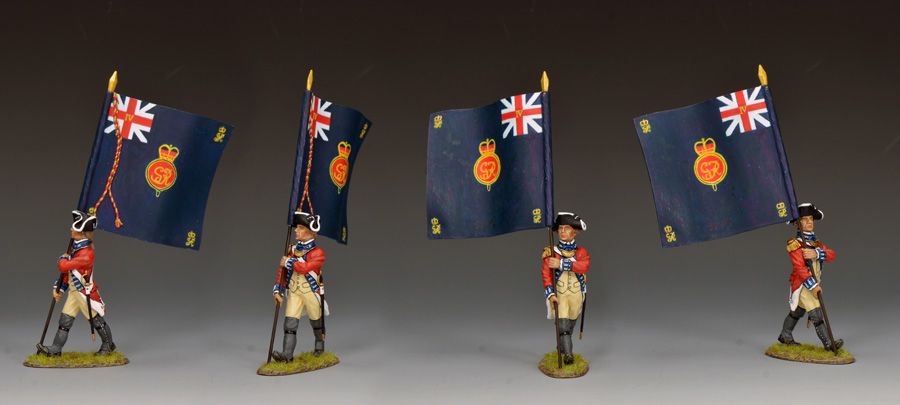
| BR105 “4TH Regiment of Foot Officer w/Regimental Colour” The Regimental Colour or ‘Second Colour’ normally had a small ‘Union Jack’ in the upper canton while the rest of the flag was in the same colour as the Regiment’s own colour ‘facings’ which, in this particular case, was dark blue. Once again, the regimental crest bearing the King’s monogram topped by a crown is in the same style and size as the one on the ‘King’s Colour’ and appears in the central position. In the remaining three corners of the flag are smaller royal monograms and crowns. A second junior officer carries this Regimental Colour. |
 |
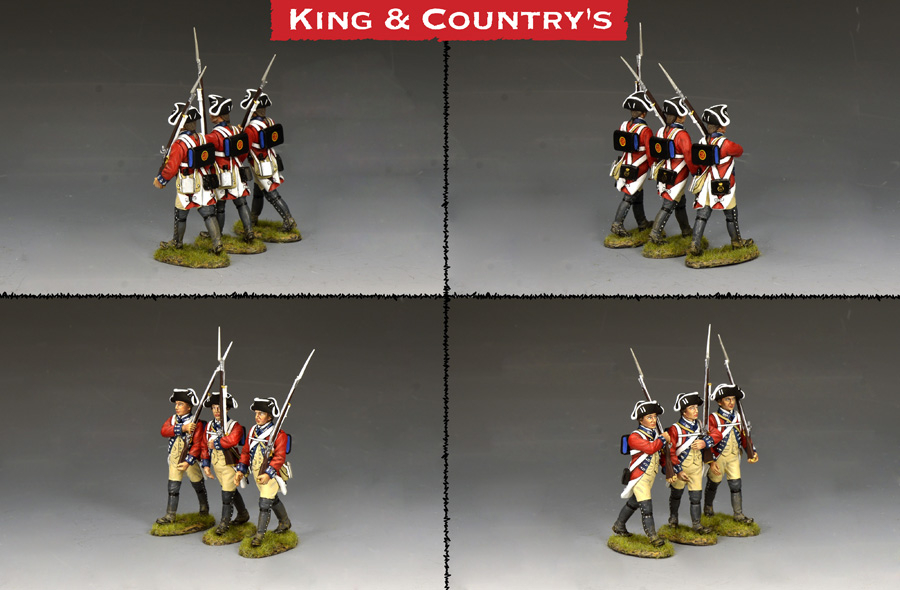
| BR107 “Marching Redcoats” (Set of 3) A trio of soldiers from the 4th Foot. All are holding their ‘Brown Bess’ muskets in slightly different ‘shoulder-arms’ positions. These three figures look great together or in larger numbers to form a regimental or company advance… |
 |
AVAILABLE: Early December
C.“Over The Hills and Faraway…”
From battles in the Americas during the Revolutionary War to other battles in other places just a few decades later…When yours truly began researching the history and stories behind the 95th Rifles and especially the ‘Sharpe’ novels and various television films many fresh ideas came forward that we at K&C decided would make great additional figures to help expand the range.
Here are twelve more of ‘Sharpe’s 95th Rifles’ that we think will fill in some blank spaces in our last releases.
For your information we will also be working on certain key characters from the TV series for later release in 2026.But, in the meantime, here are the latest recruits for our rifle regiment.
.jpg)
.jpg)
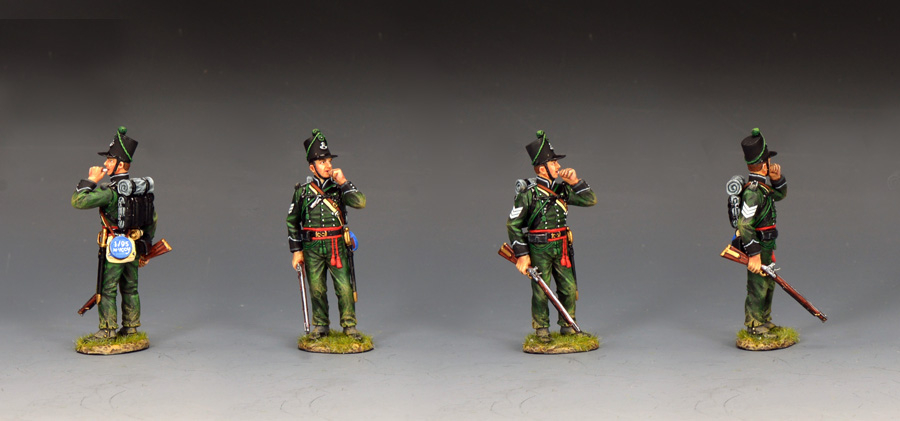
| NA547 “95R. Sergeant w/whistle" The 95th Rifles used whistles to communicate commands and signals as a loud and distinct alternative to shouting over the din and confusion of the battlefield. Specific whistle signals such as “halt” or “Alarm Close” were used to command or attract the men’s attention and have them close ranks. Both officers and non-commissioned officers used their whistles frequently to issue other instructions and warnings. Occasionally, sentries would also utilize whistles to alert their comrades in the event of trouble. |
 |
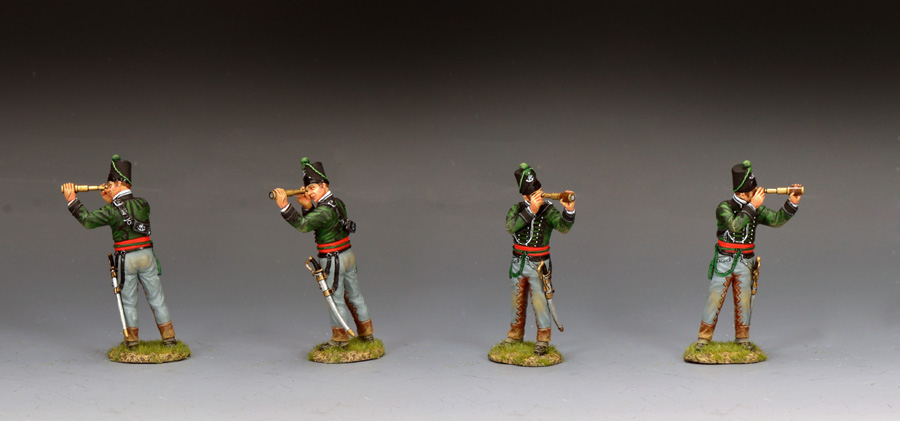
| NA548 “95th Officer w/Telescope” This is a much-requested old favourite that has been resculpted with improved details and better painting. |
 |
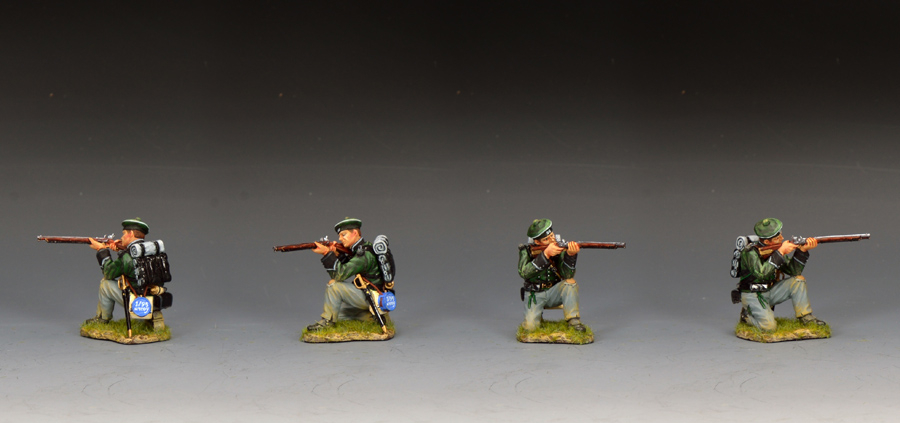
| NA549 “95th Rifleman Taking Aim in the Seated Position” Wearing his ‘forage cap’ this rifleman adopts a comfortable and relaxed position to take on the enemy. |
 |
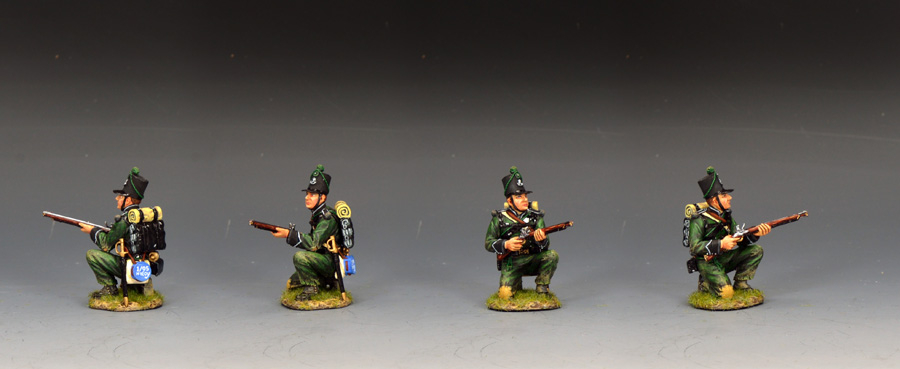
| NA550 “95th Rifleman Kneeling Ready” A classic rifleman in a classic pose. |
 |
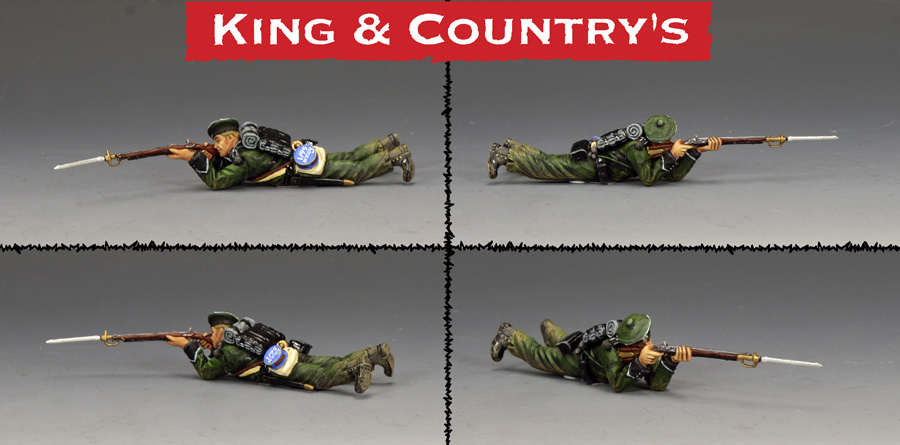
| NA551 “95th Rifleman Lying Prone” Presenting the smallest target to enemy sharp shooters in yet another classic shooting position. |
 |
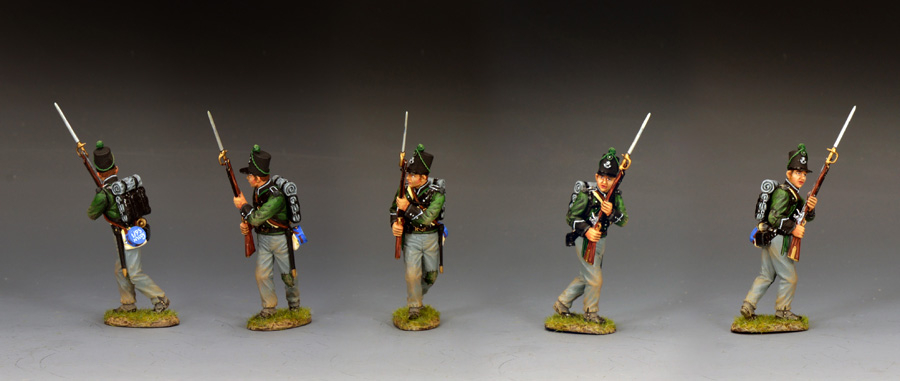
| NA552 “95th Rifleman Advancing To Attack!” With the sword/bayonet attached to his Baker Rifle the attack begins. |
 |
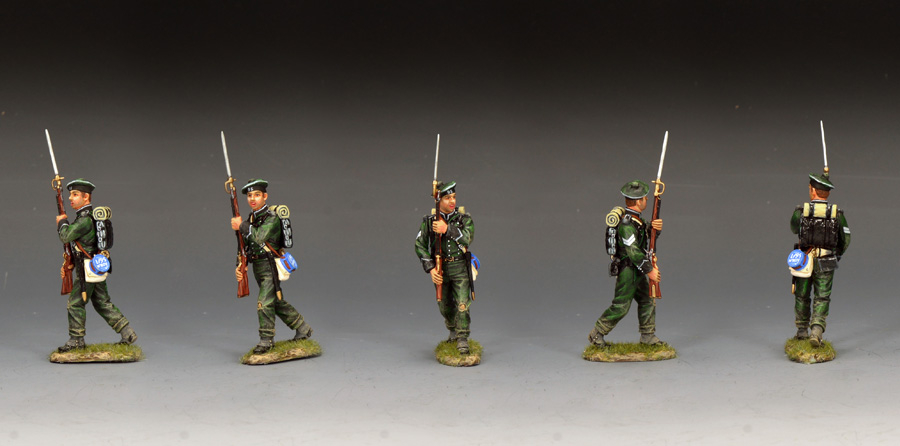
| NA553 “95th Rifleman Moving Forward” Another rifleman with his sword / bayonet attached moves alongside his comrade. |
 |
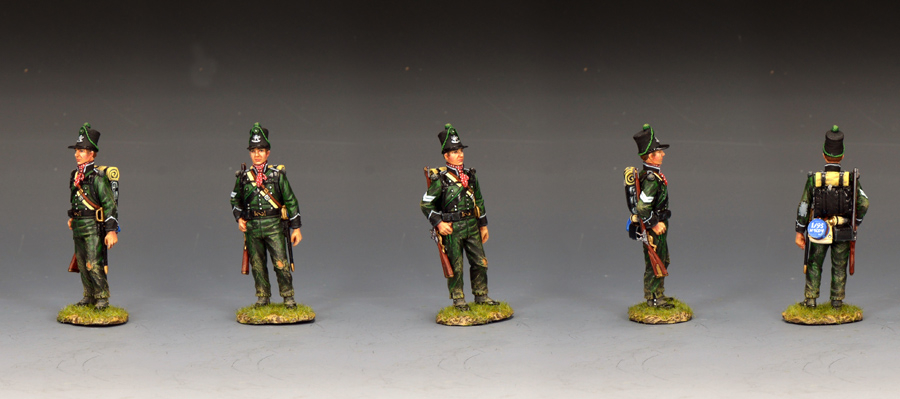
| NA554 “95th Rifles Corporal” Awaiting orders this fairly relaxed corporal enjoys a few moments of respite. |
 |
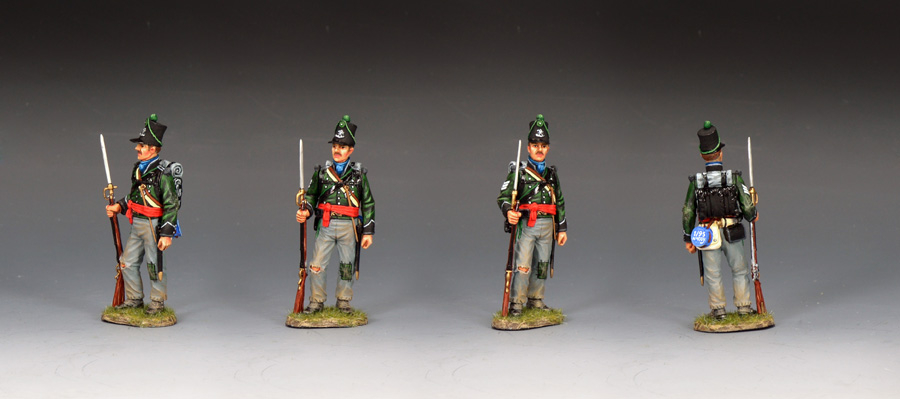
| NA555 “95th Rifles Standing Sergeant” This particular figure was inspired by a great illustration of a Rifles N.C.O. in one of Osprey’s wonderful Napoleonic series. |
 |
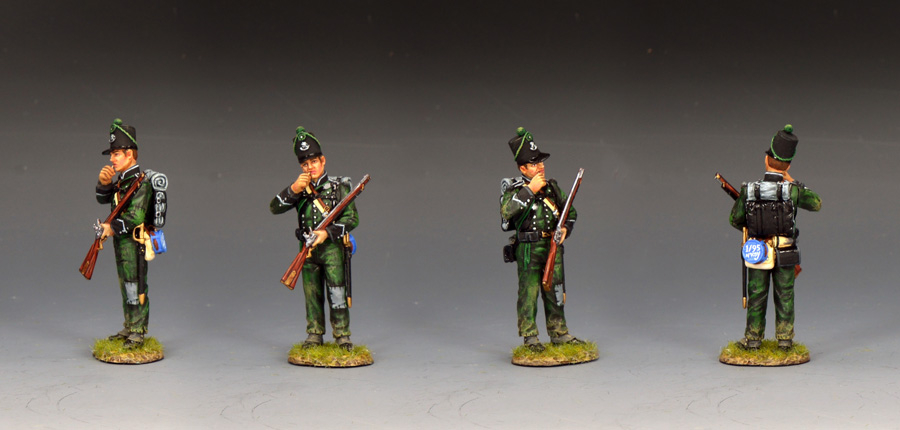
| NA556 “95th Rifleman Biting The Cartridge” Cradling his Baker rifle in his left arm this soldier bites the end off the paper cartridge as he begins to reload. |
 |
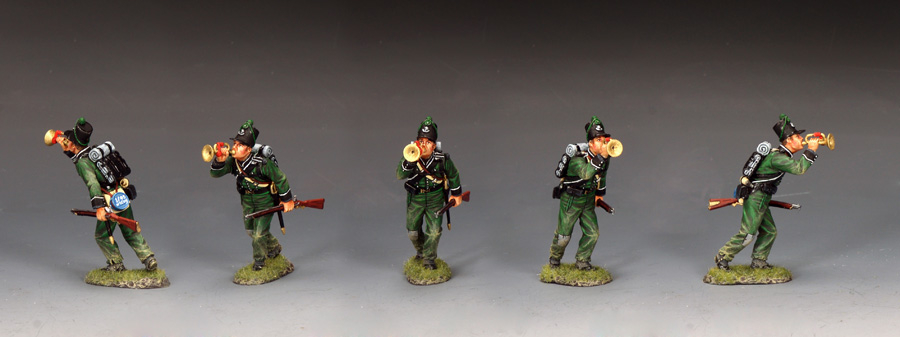
| NA557 “95th Rifles Bugler” The Buglers of the 95th were key figures in the regiment responsible for relaying commands on the battlefield using their bugles. Their primary role was to communicate orders to the widely dispersed riflemen, who operated as advance guards, scouts and skirmishers. This was in stark contrast to the massed formations of more traditional infantry regiments. |
 |
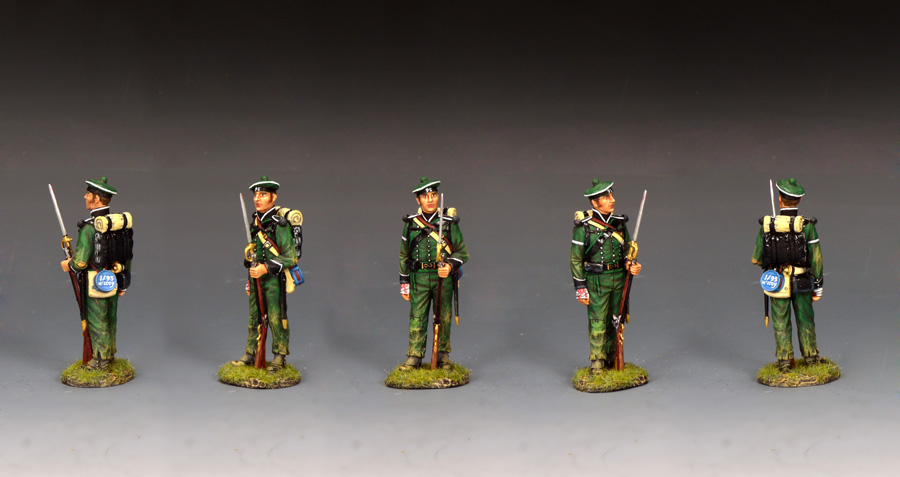
| NA558 “95th Rifles Chosen Man” A ‘Chosen Man’ within the 95th Rifles was an experienced and reliable soldier during the Napoleonic Wars roughly equivalent to a modern-day ‘Lance Corporal’. This elite rifleman wore a white ribbon / armband on their upper right arm denoting their status. In addition they were chosen for their marksmanship and leadership ability to lead a squad of other riflemen. Other important duties included inspiring their subordinates and leading small units. |
 |
AVAILABLE: Early December
D. From Battlefields To Classrooms…
The history of education in China can be traced back more than sixteen hundred years before the birth of Christ!
Education was seen as the most efficient way to achieve higher social status for ordinary people.Scholars had to study hard to prepare for government tests which, if successful, would lead to obtaining an important position.
This ambition and veneration of the importance of education still persists to the present day and was seen as equally important during the long period of British Colonial Hong Kong (1841-1997).
Here is a little window into the past through the portals of “Streets of Old Hong Kong”…
.jpg)
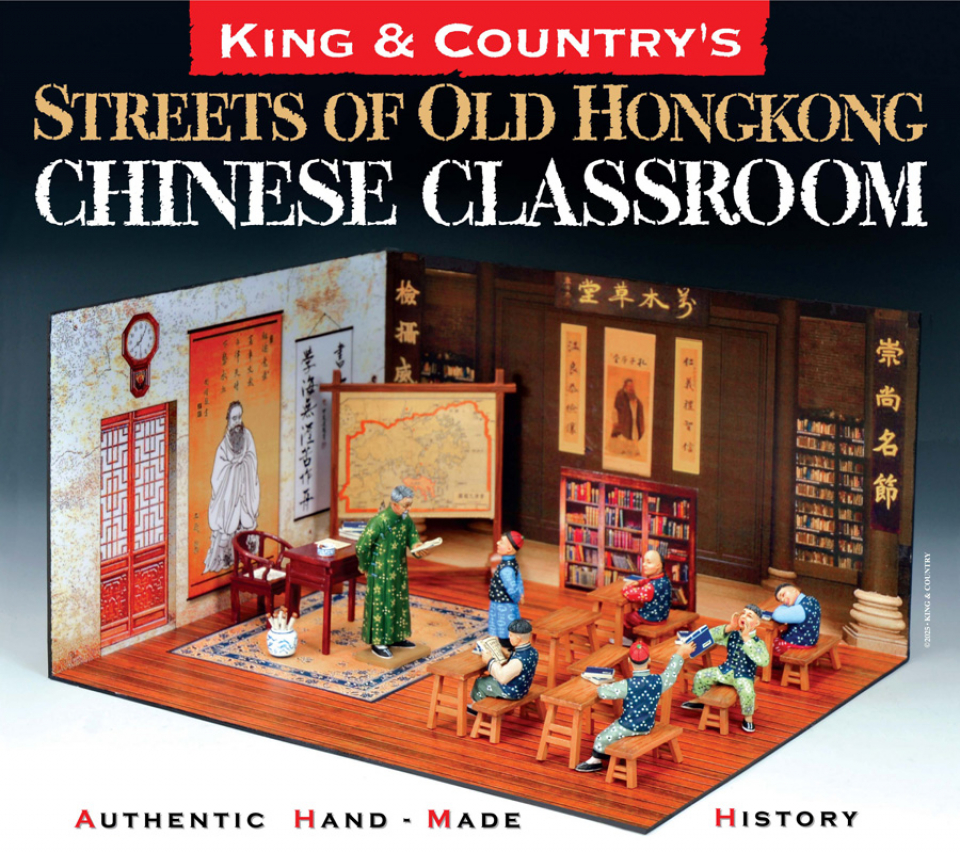
| HK315(G/M) “The Chinese Classroom” This little scene depicts one of the many private schools established during the latter part of the 19th Century for the sons of gentle folk in Colonial Hong Kong. As the elderly teacher examines the work of one pupil other pupils are variously occupied being mischievous, paying attention or, in one case, enojoying a nap on his desk! In addition to the 7 figures there are 6 desks and bench-seats for the pupils as well as a teacher’s table and chair, a jarfull of scrolls and a large wooden map board depicting Hong Kong Island. All of the figures and accessories fit perfectly into a 2-dimensional, full colour representation of a typical Chinese Classroom of the 1890s. |
 |
AVAILABLE: Mid December
And that, as I like to say, is that for another month. In the meantime from all of us at King & Country in Hong Kong and Texas may we wish you a very, Merry Christmas and a happy, healthy and prosperous New Year in 2026.
Co-founder & Creative Director
King & Country Ltd.