

DISPATCHES
May 2026
Hi Guys,
Welcome once more to the ‘Merry Month of May’ and the announcement of a major, brand-new series of King & Country miniatures that depicts one of the great conflicts of history.
But, before we come to all that let’s talk about some very useful and welcome additions to a pair of existing K&C ranges.
1. BEING RELEASED THIS MAY…
A. How To Build Your Own Scots Guards Pipes & Drums’
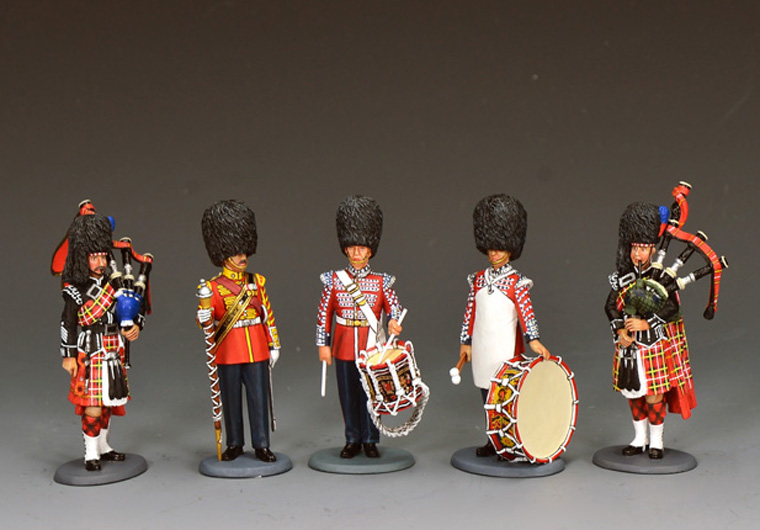
Back in March of this year we released two very special figures depicting a ‘Pipe Major’ and a ‘Piper’ from one of Britain’s most famous and celebrated regiments – ‘The Scots Guards’.Both of these single figures look great on their own BUT when you add three more individual regimental musicians you have the makings (or if you prefer) the beginnings of a complete ‘Scots Guards Pipes & Drums’.Now read on…
|
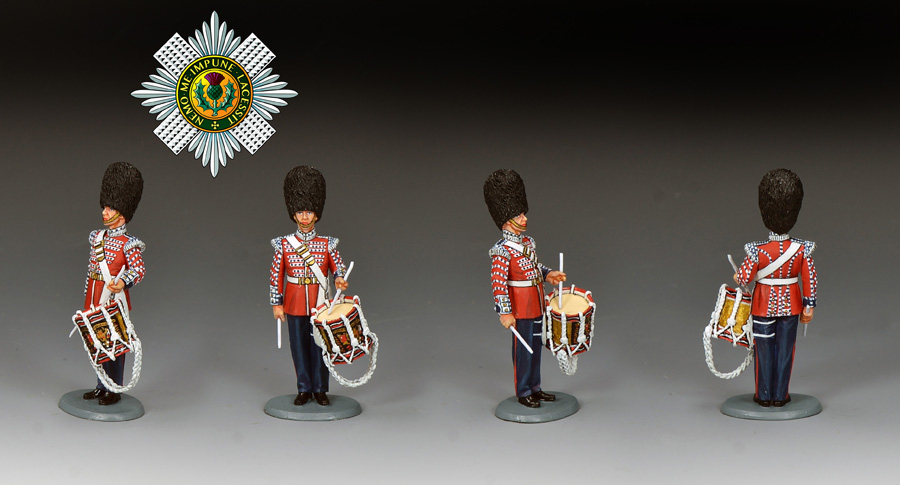
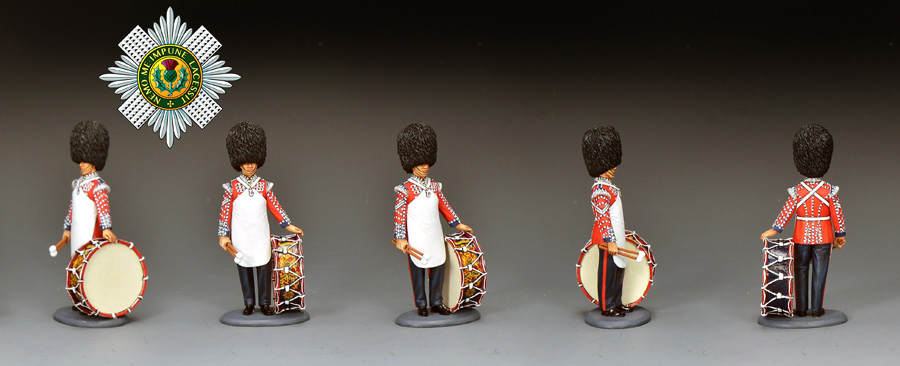
CE120 ‘Scots Guards Drummer’ This standing-at-attention Side Drummer is wearing the iconic scarlet red tunic complete with shoulder wings (musician wings) plus decorative ‘Fleur-de-Lis’ Lace piping on the body of the tunic and sleeves.This intricate lace pattern dates back to the time when English monarchs laid claim to the throne of France |
|
|
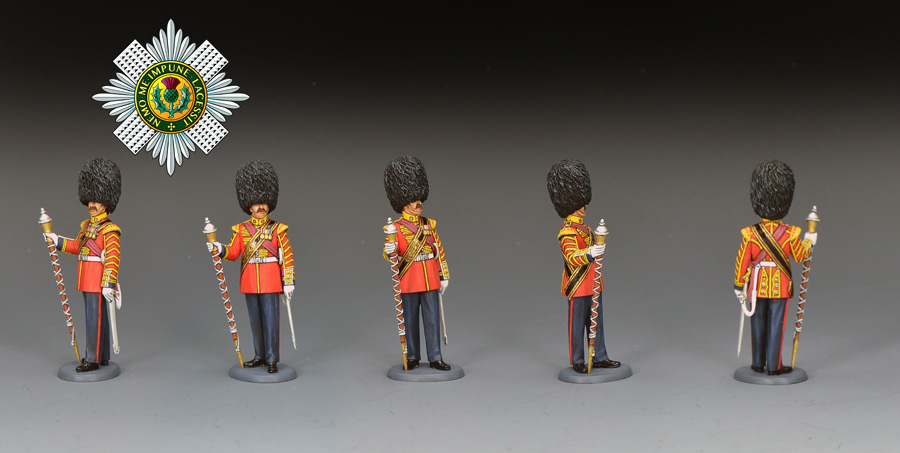
CE122 ‘Scots Guards Drum Major’ The Drum Major of all British Guards Regiments is a highly skilled ‘Warrant Officer’ (usually a W02) responsible for leading the Pipes & Drums or Corps of Drums maintaining immaculate standards of dress and deportment while simultaneously choreographing marching movements. |
|
|
CE123 ‘Scots Guards Drum Major’ The Drum Major of all British Guards Regiments is a highly skilled ‘Warrant Officer’ (usually a W02) responsible for leading the Pipes & Drums or Corps of Drums maintaining immaculate standards of dress and deportment while simultaneously choreographing marching movements. |
|
B.‘On Parade With The Royal Hong Kong Police’
That was to be our home for the next eight months while being trained to be Probationary Inspectors in the RHKP.
All 23 of us were then joined by approximately 30 locally-recruited and promoted-from-the ranks Hong Kong lads and were then divided into 3 x different squads of aspirants.
Also being trained alongside us were hundreds of other young Hong Kong men to be Police Constables.
As some of you already know the RHKP was and still is an armed force in which all officers carry a side arm and are also trained in a number of other lethal weapons such as shotguns, rifles and submachine guns.
At that time Hong Kong was still a British Colony (or Territory as some officials preferred) and the Police Force was organized along Paramilitary lines with much attention being placed on discipline and drill in a very British style and manner.
And so each day began with a brief morning parade before all of us went off to various classes teaching basic law… firearms training… hand-to-hand combat… and learning elementary ‘Cantonese’ (the local Chinese dialect) plus, of course, parade-ground drill which for most recruits was a whole new experience.
For those few of us like myself who had a previous military background that posed few problems and, in fact, was a relatively pleasant and enjoyable break from the more tedious classroom lessons.
On some Saturday mornings however there would be a full-blown parade on the parade ground square where the most senior squads of recruits were practising for their ‘Passing-Out Parades’ which signalled their successful completion of all their long, 8 months of training and their upcoming departure for different Police units all over Hong Kong Island, Kowloon and The New Territories.
These parades were quite spectacular and would be musically accompanied by the RHKP’s own military-style band and sometimes the Force’s own Pipes & Drums.
All of the young, soon-to-be Constables were lined up in their squads (about platoon-size) with a soon to be commissioned officer standing in front.
All the rank and file back in 1977, carried vintage Lee Enfield .303 rifles with bayonets attached.Everyone stood at ease before the Chief Drill & Musketry Instructor, in my day.Chief Inspector Willy Fullerton, (a former Scots Guards sergeant major) bellowed out a series of commands that ordered different rifle positions to all those on parade… ‘Slope Arms’, ‘Order Arms’ and ‘Present Arms’ to name but a few.
After completing each move to the Chief Drill & Musketry Inspector’s pleasure there would then be a full ‘March Past’ which, if not perfect, would be repeated until ‘Willy’ was satisfied.
All in all it was quite a spectacle to watch and in even more spectacular to take part in.
Now today, many, many years later times have changed and the British-style parades have long gone however a few traces remain.
A few months ago I was invited to a ‘Passing-Out Parade’ up at ‘Fan Ling’ in Hong Kong’s New Territories, this is the home of The Hong Kong Police’s P.T.U. (the Police Tactical Unit), the Force’s own ‘Riot Squad’.
This very disciplined and well-trained mobile unit carries out any number of special duties including crowd control… major disasters… civil disturbances… and a host of other public duties helping and assisting the local population and government.
At this particular parade the military style today is definitely more in keeping with The People’s Republic of China however there was still the police band playing the theme from ‘Star Wars’ and even ‘The Great Escape’ finishing up with ‘Auld Lang Syne’ as the all-new P.T.U. members marched off the parade ground plus they even had a squad of Police bagpipers playing too… That brought back more than a few memories.
.jpg)
|
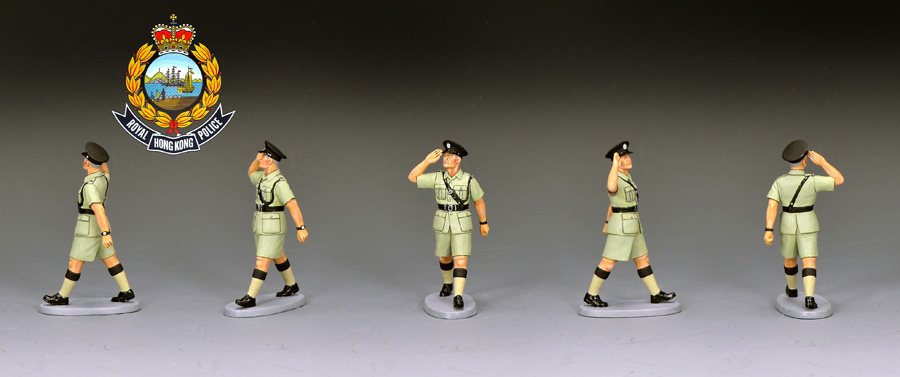
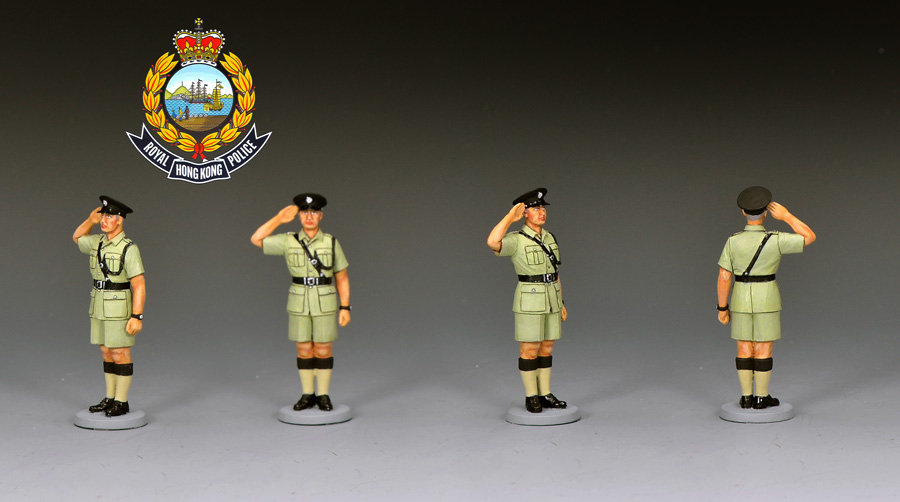
HKY028 ‘RHKP Marching Inspector’ This newly-commissioned Inspector smartly marches forward at the head of his squad with the command, ‘Eyes Right’ he snaps his head to the right while raising his right open hand to the skip of his cap in salute. |
|
|
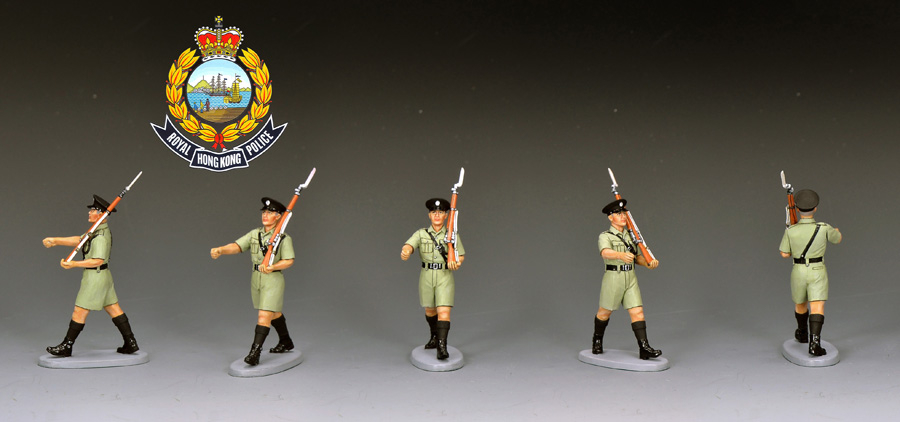
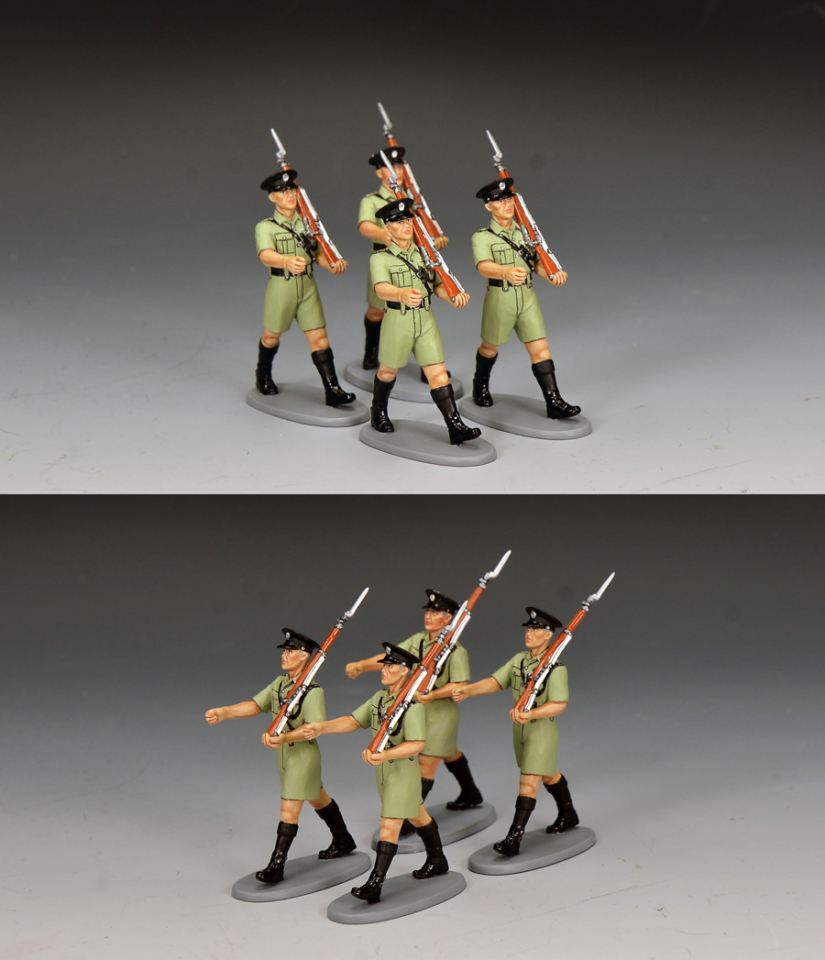
HKY029 ‘RHKP Marching Constable w/Rifle & Bayonet’ Looking to his front with arm swinging this young Constable his eyes forward, marches past. |
|
|
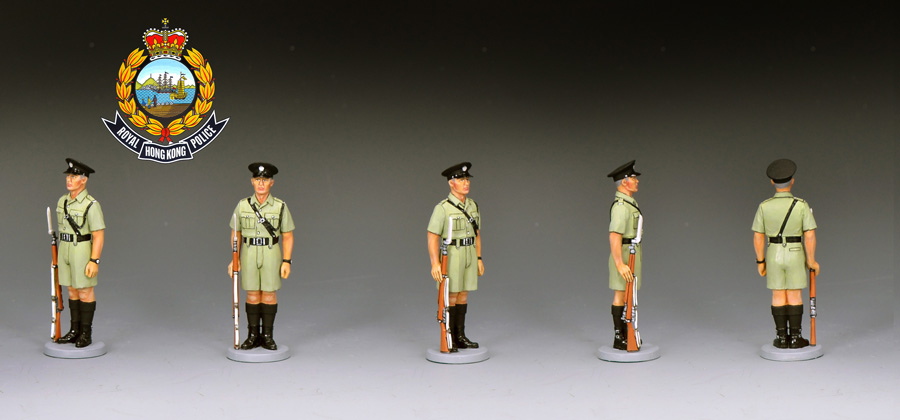
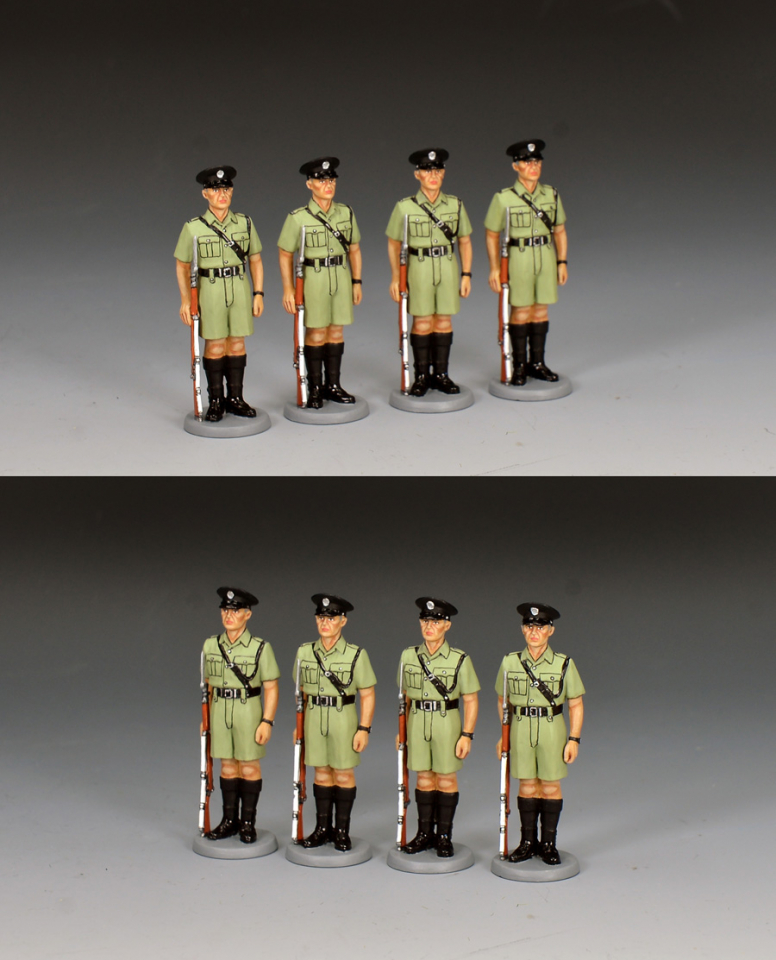
HKY030 ‘RHKP At Attention Constable w/Rifle & Bayonet’ This young trainee constable has his Lee Enfield w/Fixed Bayonet at the ‘Order Arms’ position as he stands firmly at attention. |
|
|
HKY031 ‘RHKP Saluting Inspector At Attention’ This Probationary Inspector salutes to his front in the traditional British-style with right open-hand. |
|
|
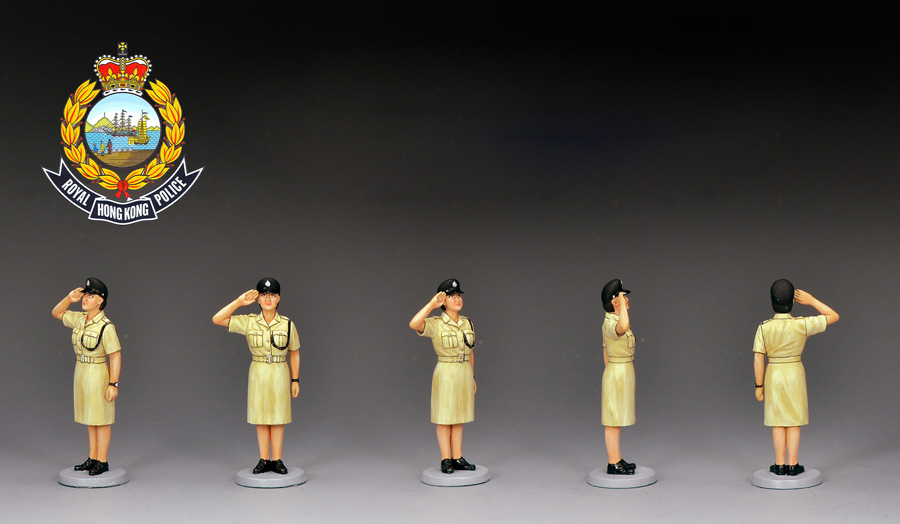
HKY032 ‘‘RHKP Saluting Policewoman’ |
|
| HKY-S01 ‘A Set of 4 x Marching Constables’ This is for those collectors who believe that you can’t really have a proper parade with only one marching officer. At a slightly lower price of course. |
|
| HKY-S02 ‘A Set of 4 x At Attention Constables’ The same thinking as above…What do you think…? |
|
AVAILABLE: Mid May
C. ‘SEKIGAHARA 1600’
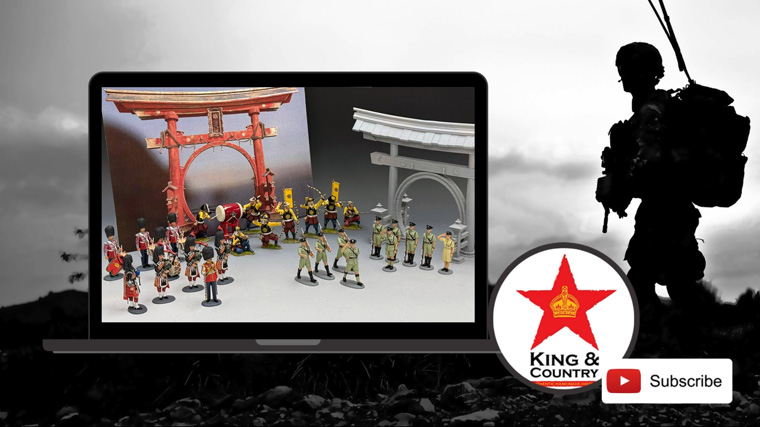
In the year 1600, after 150 years of perpetual warfare, Japan’s warlords united behind two rival factions triggered by the death of the great warlord Toyotomi Hideyoshi.The two contenders for power were Ishida Mitsunari and Tokugawa leyasu.Their contest was finally settled by a huge force of arms in a small mountain valley in central Japan.
By the end of that day, on 21 October 1600, 40,000 corpses from both armies lay dead across the grass of the small valley as Tokugawa leyasu became the undisputed master of Japan.Within three short years the Emperor himself would grant him the ultimate title he sought… Shogun.
This particular battle and the warriors who fought it are the focus of this colouful new and exciting King & Country series that captures the unique military style and fighting techniques of medieval Japan alongwith the Samurai and Ashigaru warriors who took part in this mighty struggle.
For the previous 5 years K&C had already been designing and producing several historical series of figures for Del Prado in Spain.
This had begun with ‘Soldiers of the 20th Century’, a range of over 100 individual figures depicting soldiers from different armies of the world wearing the weapons, uniforms and equipment from various wars that stretched from the Boer War in 1900 up through both World Wars to smaller but no less bloody, conflicts in Vietnam and The Middle East.
Following that success we went on to develop two more successful series covering the different European armies of the ‘Napoleonic Era’… both Infantry and Cavalry with 120 figures in each series.After that our next Del Prado project was one K&C actually suggested to them… ‘Firemen of The World’.Like the last two series this was to comprise 120 individual ‘Firemen’ with the very first in the range to be a New York City Fireman from the 9/11 terrorist attack in 2001.
While still working on this series one of D P’s Asian subsidiaries, Del Prado Japan requested we work with them on a series of figures depicting Samurai warriors as well as the lesser-known ‘Ashigaru’ soldiers who were the more common and more numerous foot soldiers of that period.
Now, jump forward 20 years to 2025 when myself and my wife, Liza went on a walking tour of central Japan with a group of friends.
Each day we would hike for 10-15km. and each evening would stop at a traditional Japanese Inn to eat and sleep in the Japanese style before beginning a different walk the next morning.
During this tour we had the opportunity to visit several amazing Japanese castles which often would have life size figures of traditional ‘Samurai’ warriors and ‘Ashigaru’ foot soldiers.
One particular castle even had ‘live’ versions of these figures walking around or standing guard for visitors to take photos with.It was truly inspiring and I was duly inspired seeing them!
While I was doing all of this I also discovered that at each of the castles we came to had ‘Gift Shops’ for visitors to purchase mementos of their visit – Postcards, Tablemats, Drinks coasters and all kinds of nice little ‘nicknacks’ but, alas, not one miniature figurine!?!
Once back in Hong Kong I took a closer look at what some of our competitors had produced and was nicely surprised to see some excellent figures but none that wanted to tell this story in the same way K&C want to tell it.
And so, here is the first little ‘peek behind the kimono’ to show you what we plan on releasing.
Our simple, straight-forward concept is to offer a wide range of action figures that in the case of the rank and file ‘Ashigaru’ foot soldiers we will offer each individual figure in the different colour of the two opposing armies.A range of single Samurai warriors and leaders will also be included in this series.
A WORD ABOUT THE ‘ASHIGARU’
Very rudimentary sets of basic designs of armour known as ‘Okashi Gosuka’ or ‘Light Armour’ were often produced in bulk to be issued to these ‘warriors on foot’.
Among their primary weapons were long lances or spears called ‘Yari’ which could be as long as nine feet in length.
Other large formations of ‘Ashigaru’ were comprised almost exclusively of ‘Arquebusiers’, a matchlock predecessor of the musket and, of course, ‘Archers’.
In addition to their primary weapon virtually every ‘Ashigaru’ also carried a long sword (called a ‘Tachi’ or ‘Katana’) and sometimes also a smaller sword called a ‘wakizashi’.
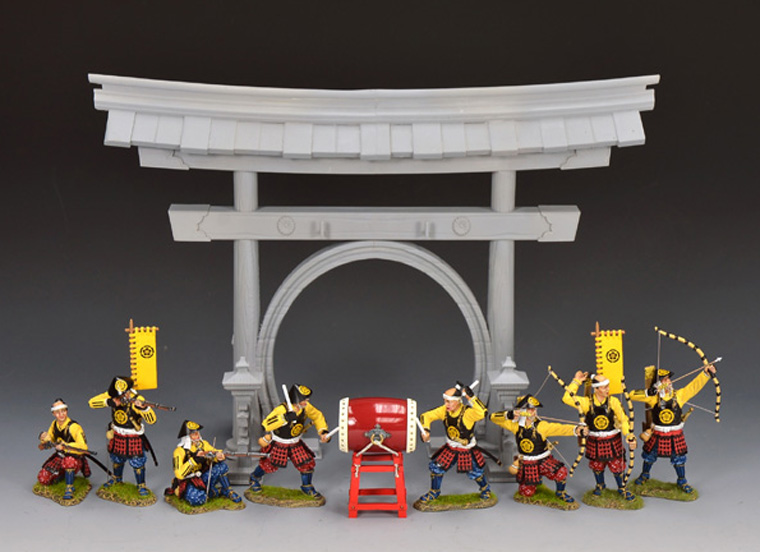
Here is just the first small installment of our fighting ‘Ashigaru’ warriors belonging to the ‘Western Army’ of Ishido Mitsunari (1560-1600).
|
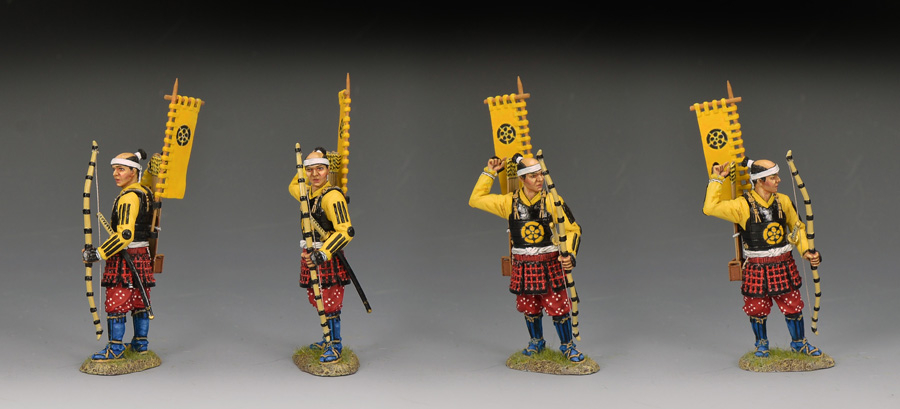
SW001 ‘Western Army ‘Ashigaru’ Archer Reaching for An Arrow’ This Ashigaru Archer wears the typical body armour of a Japanese foot soldier of this feudal period. Relatively inexpensive to produce it consisted of a simple ‘cuirass’ of lacquered metal to cover the chest and back areas. Cloth sleeves were padded with integral splints of the same metal or hardened bamboo sewn on top or the outside of the garment. |
|
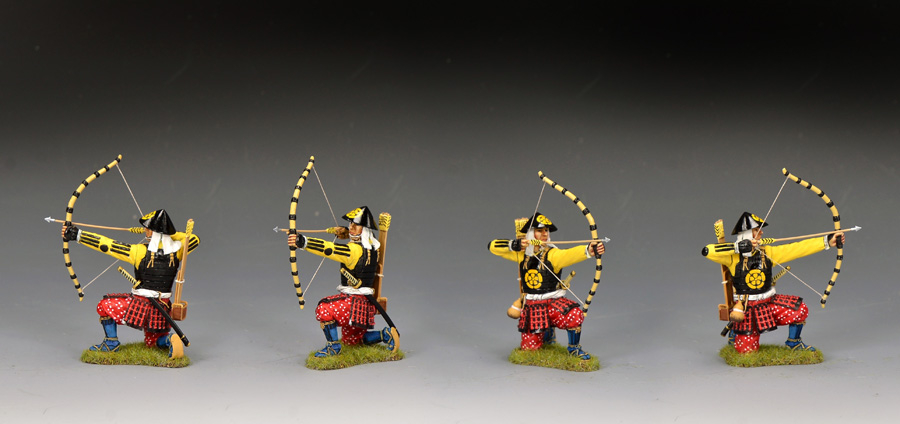
| SW003 ‘Kneeling Ashigaru Archer’ Outfitted and equipped in the same manner as SW001 this particular Archer is in addition wearing the ‘Jingasa’, the conical or bowl-shaped “war hat” designed for combat and mass production. These “war hats” were typically made of lacquered iron, leather or wood and provided basic protection against downward blows and both the sun and inclement weather. In addition, clan and unit crests would often be painted at the front of each hat which would be attached by rope or cloth chin straps to the wearer’s head. Cloth sunscreens are also attached to each “war hat” to shield the neck and sides of the head. |
|
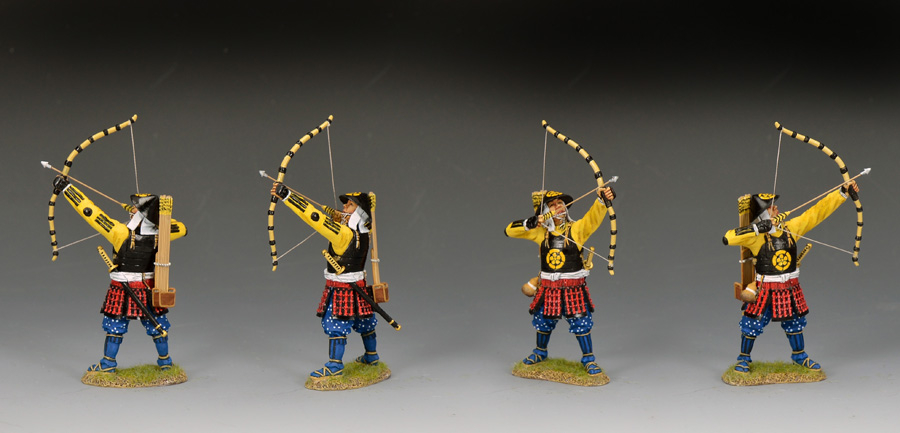
| SW004 ‘Ashigaru Archer About To Launch An Arrow’ Aiming upwards this Archer is about to let fly… |
|
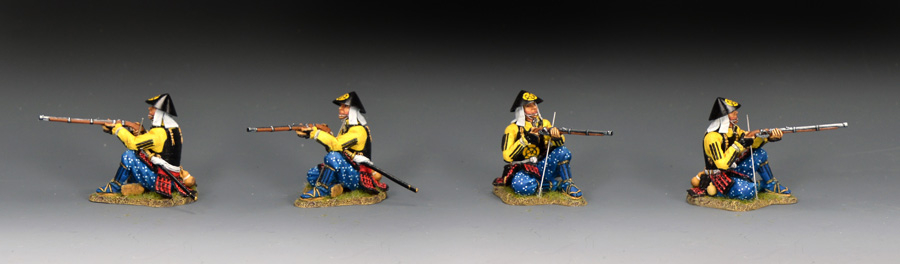
| SW006 ‘Sitting Ashigaru Arquebusier’ By the year 1600 many Ashigaru were heavily equipped with ‘Tanegashima’, Japanese-made matchlock arquebuses introduced into Japan by Portuguese traders in 1543. These weapons revolutionized warfare allowing lower-class Ashigaru to train and destroy heavily armed cavalry or Samurai. Within a few short years arquebus-armed ashigaru far outnumbered the older, traditional archers leading from a two-to-one ratio at the time of Sekigahara to a four-to-one ratio in later periods. Archers however still had one distinctive advantage… They could fire, reload and fire once more much faster! Our Ashigaru Arquebusier is loaded and ready to fire. |
|
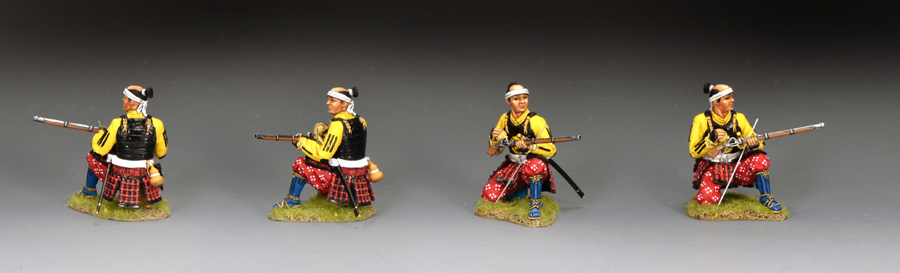
| SW008 ‘Kneeling Priming Ashigaru Arquebusier’ This figure is priming his match lock mechanism with a little gunpowder in preparation to fire. Also note the standing metal ‘ramrod’ close at hand with all three of these first Ashigaru Arquebusiers. |
|
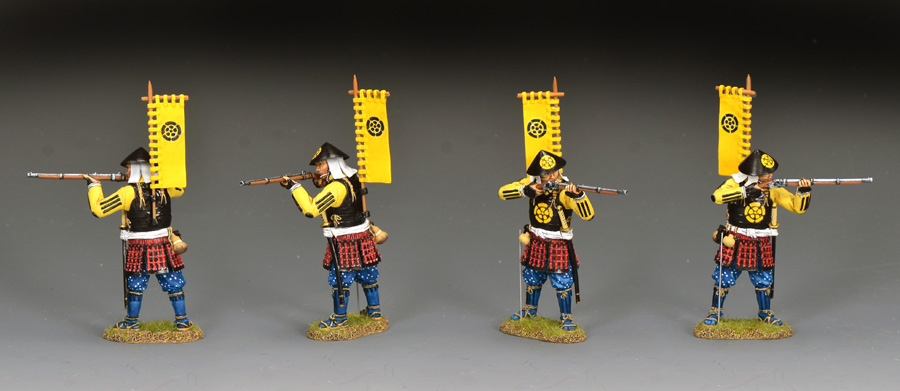
| SW010 ‘Standing Firing Arquebusier’ One of our leading Arquebusiers, complete with his ‘Sashimono’ banner, aiming at the enemy and about to open fire. |
|
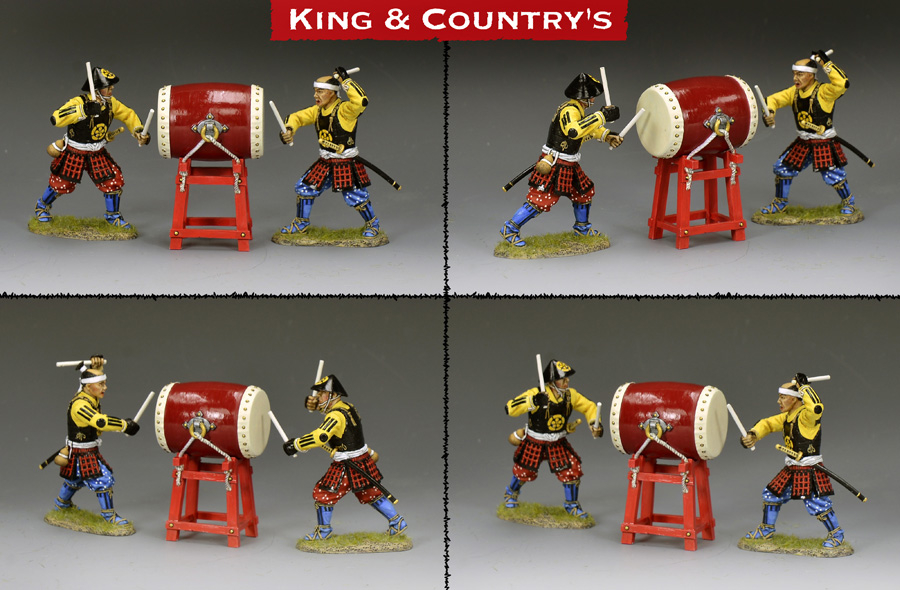
| SW014‘Ashigaru Taiko Drum Set’ Taiko Drums are traditional Japanese barrel shaped percussion instruments ranging from small to massive sizes known for their thunderous sound and physical performance style. With roots in ancient rituals, battle and theatre they are characterized by high energy, synchronized movement and perfect discipline. In battle they were used to communicate between commanders and units as well as scaring the enemy. Our spectacular and dynamic two figure team and their Taiko drum can easily sound and make their presence felt on any battlefield… anywhere! |
|
AVAILABLE: Mid-Late May
2. BEING RETIRED IN MAY…
As usual there are a very few special pieces being retired this particular month… some of them with a distinctly ‘Royal’ connection….JPG)
.JPG)
|
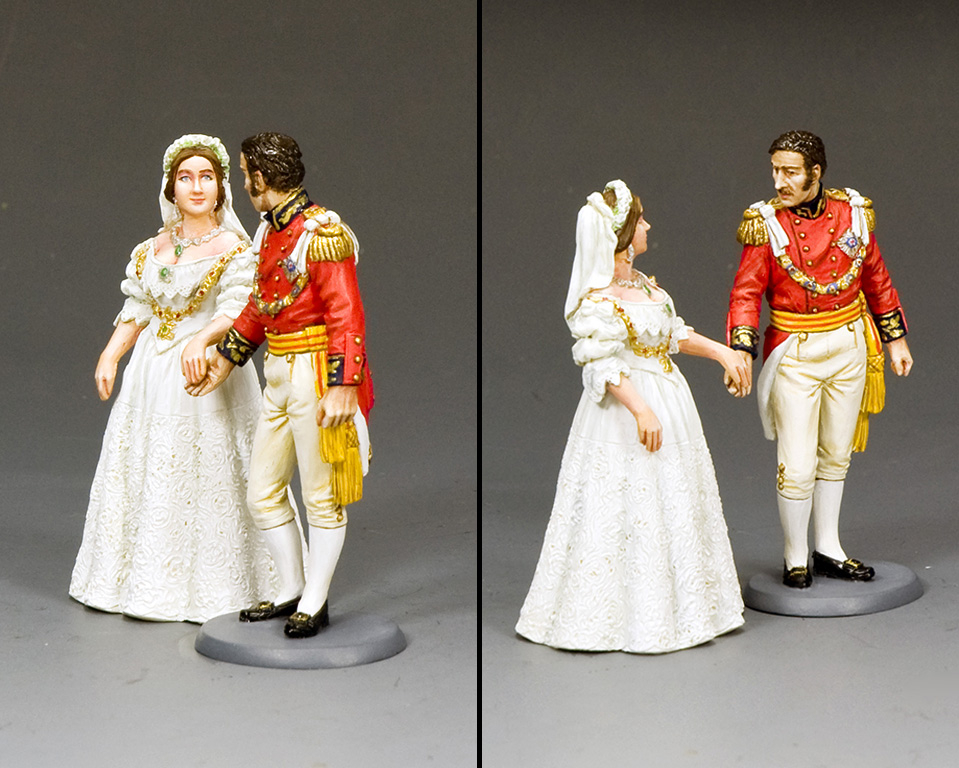
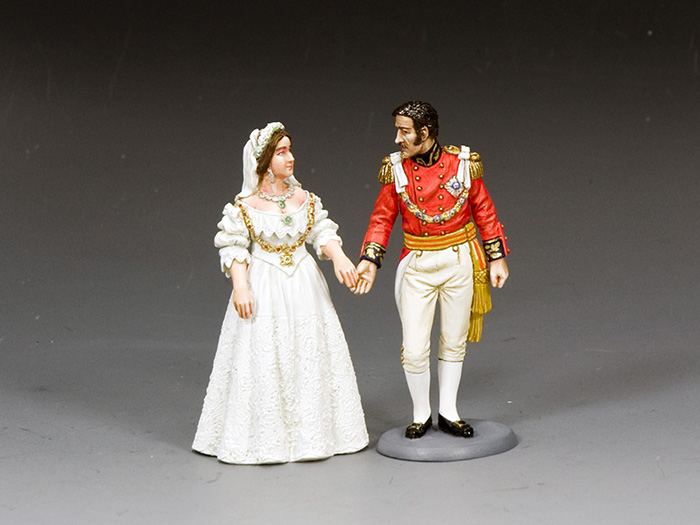
TR001 Victoria & Albert This pair of regal figures was the very first release of our ceremonial range ‘The Royals’ which has proved to be very popular not only in Britain and its Commonwealth of nations but all around the globe. |
|
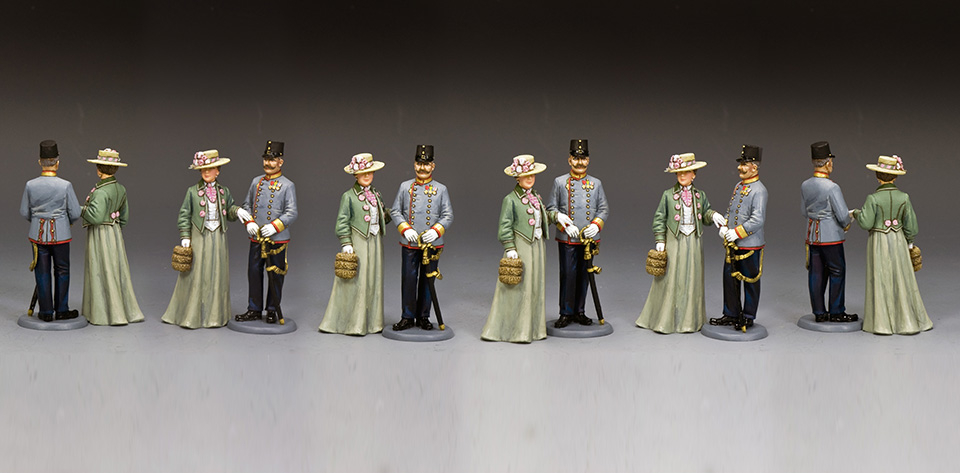
| TR004 Grand Duchess Olga & Grand Duchess Tatiana Tsar Nicholas Ⅱ, the doomed and last imperial ruler of All The Russias was also the father of an equally – doomed royal dynasty that included four daughters and one son. The two oldest daughters, Grand Duchess Olga and Grand Duchess Tatiana are both shown in the ceremonial uniforms of two of their father’s most celebrated cavalry regiments in the years leading up to the outbreak of WW1 in August 1914. Both of the Tsar’s elder daughters died on the night of 17 July 1918 along with all of their family and four loyal servants, murdered by the Bolsheviks in cold blood. |
|
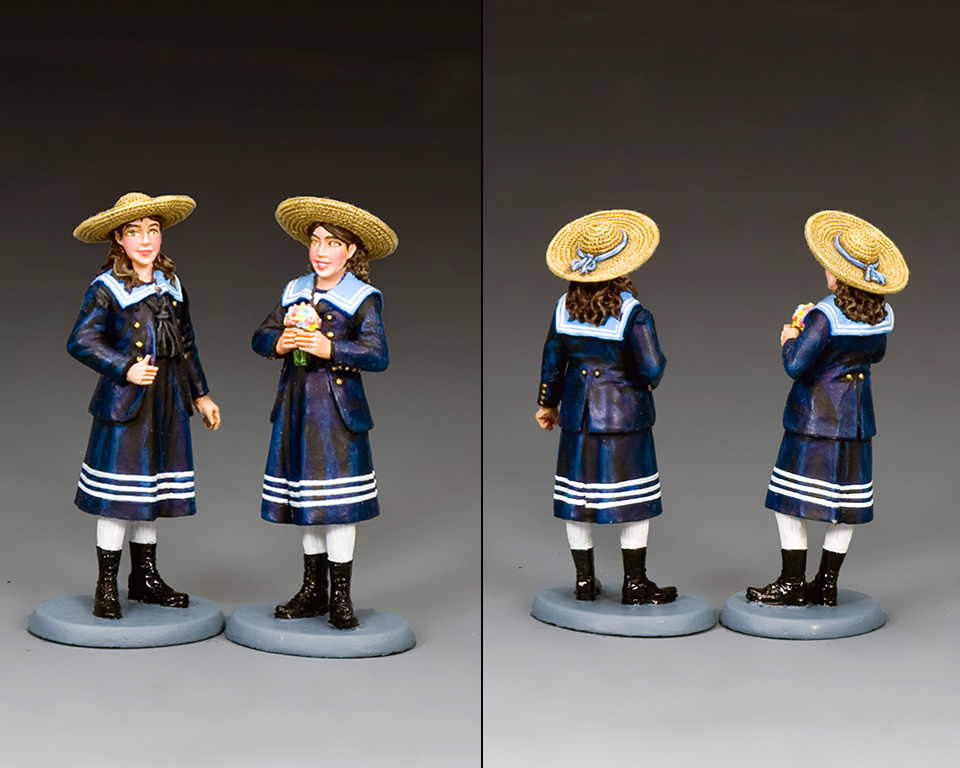
| TR007 The Grand Duchesses’ Maria & Anastasia’ The two younger Grand Duchesses are both dressed in female sailor costumes reflecting the Royal Family’s affection for the Imperial Russian Navy. Alas these two young girls were to suffer the same cruel fate as the rest of their family. These little figures show them in much happier times. |
|
From the Imperial Court of The Romanovs to the Age of Napoleon and his march across Europe and the world…
.JPG)
|
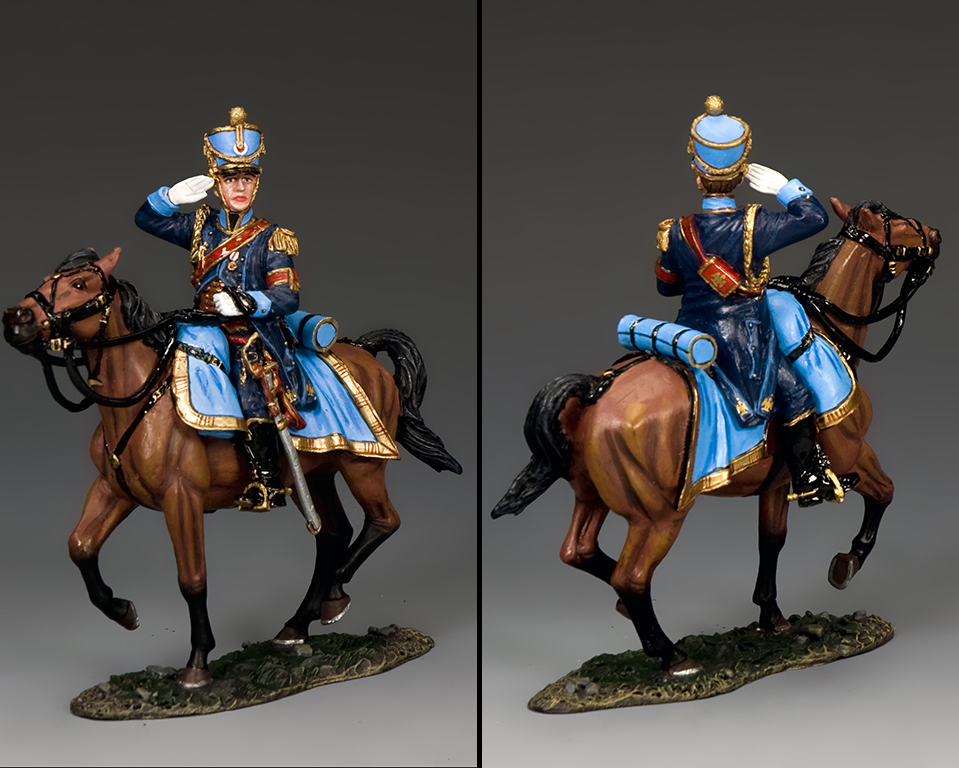
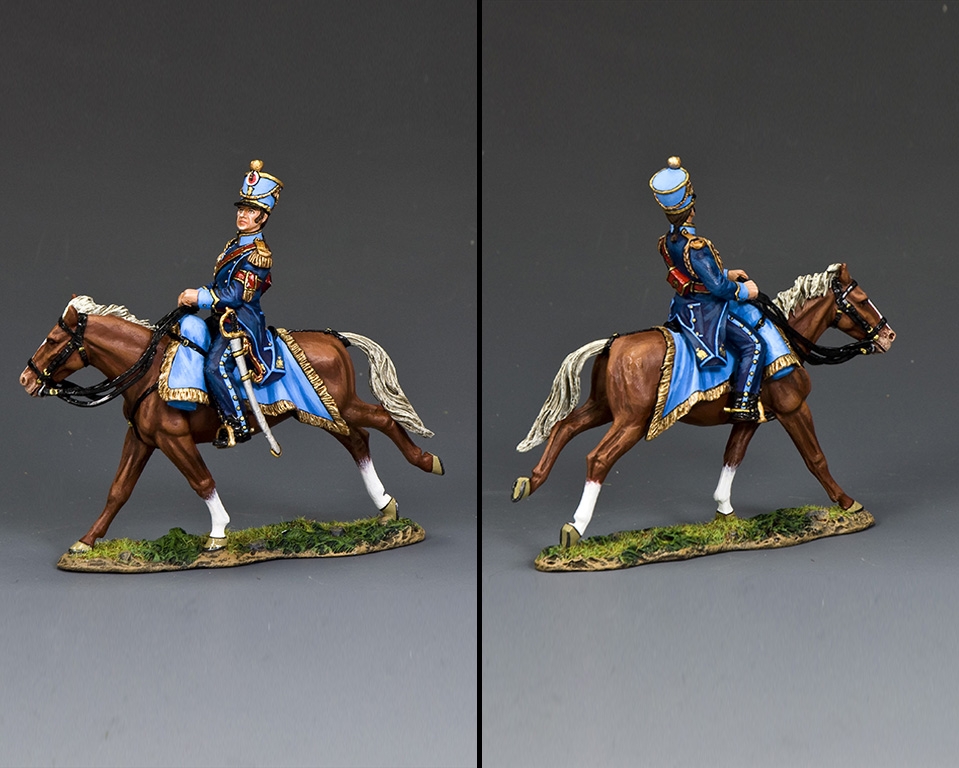
NA412 Mounted Saluting Aide de Camp Led by a young boy, Jesus and the donkey make their way through the city. |
|
| NA441 Galloping Aide de Camp Resplendent in his dark blue uniform and wearing the distinctive red and gold armband of one of the Emperor’s own select band of mounted Aide de Camps this officer stays close to the great man himself ready to be on hand at a moment’s notice to ride fast and hand deliver the Emperor’s most important commands and instructions. |
|
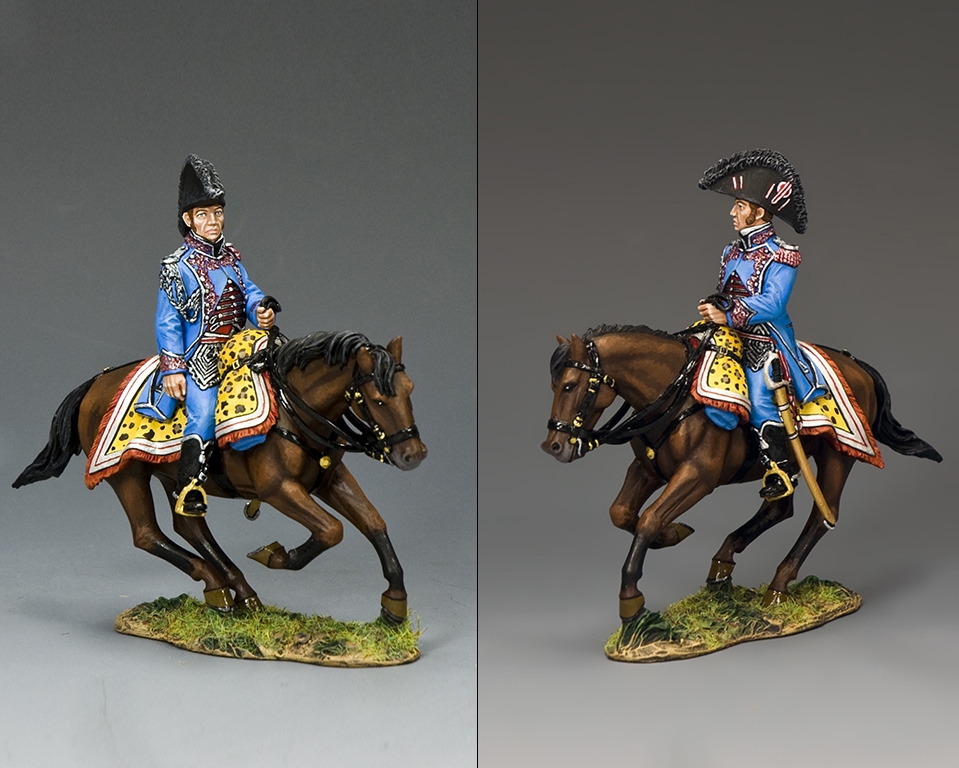
| NA444 General Gourgaud (1783-1852) General Gaspar Gourgaud was a highly talented Artillery Officer who shared Napoleon’s own interest and fascination with all kinds of gunnery and ordnance and the best ways to use them on the battlefield. General Gourgaud is shown by K&C in the full dress uniform of a ‘General d’ Ordnance’. |
|
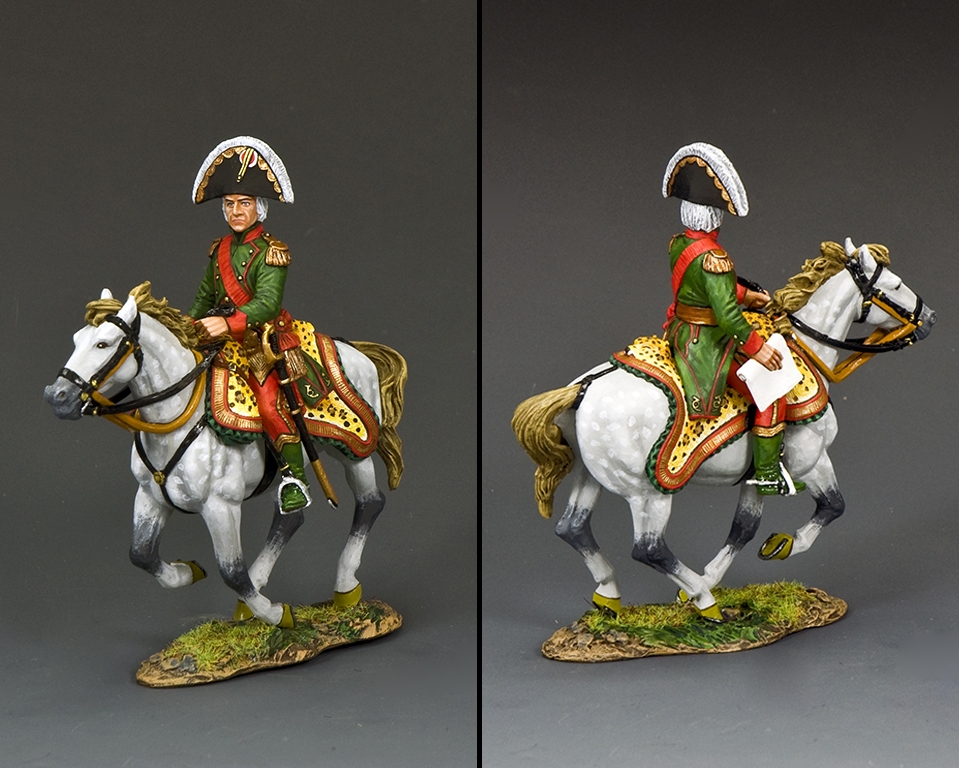
| NA445 General Jean-Baptiste Bessieres Bessiers (1786-1813) was a Marshal of The Empire during the reign of Napoleon. A great personal friend of the Emperor himself he campaigned with him in Italy and Egypt before becoming a senior cavalry commander of Napoleon’s own Guard Cavalry regiment. He also took part in many of the Emperor’s most notable battles and campaigns across the length and breadth of Europe and beyond. Although not of noble birth himself he had the manners and style of a gentleman of that time. On campaign and at court Bessieres wore the green parade uniform of his original regiment… The Guides of The Army of Italy. In addition, he liked to wear his hair long and ‘powdered’, very much in the style and fashion of the ‘Ancien Regime’. |
|
All of these colourful figures tell interesting and dramatic stories in miniatures, grab ’em while you can.
All the very best and, as usual, happy collecting.
Co-founder & Creative Director
King & Country Ltd.