

DISPATCHES
July 2026
Hi Guys,First of all, to our many American friends, a belated very happy 4th of July and congratulations on your 250th birthday … You don’t look a day over 249!
Also, welcome one and all to the month of July and a whole big bunch of great new releases that cover a very broad selection of different King & Country series and subject matter.
Let’s begin with no less than THREE new WWⅡreleases that include two momentous events that took place during the final two years of the war…
1
A. ‘BATTLING ACROSS THE BEACHES AND INTO THE BOCAGE’.
The battle for Normandy may have begun on 6 June 1944 when British, American, Canadian and other Allied Forces successfully landed on five separate beaches on its Atlantic coastline…but it certainly didn’t end there!Within days these same forces had broken out of their beach perimeters and were advancing into the surrounding Norman countryside and coming face-to-face with a new enemy… The Bocage!
‘Fighting in the bocage’ refers to the brutal, claustrophobic hedgerow warfare that erupted in Normandy, France during the bloody weeks after the D.Day Landings.
As the Allies soon discovered the word ‘bocage’ describes a centuries-old terrain patchwork of small fields and pastures bordered by sunken dirt roads and high earthen walls.
Over hundreds of years, these same walls became tightly entangled with dense brush and tree roots sometimes reaching up to 10-15 feet in height!
This extremely difficult terrain nullified the Allies huge superiority in airpower, armour and artillery. Because of this it turned the Normandy campaign into a long, slow, bloody, field-by-field battle that became known as the ‘Hedgerow Hell!’
How The ‘Bocage’ Favoured The Defenders
The defending Germans rapidly utilized this Norman landscape to build a deeply-layered, highly-lethal defensive web including:Natural Bunkers: By digging into the thick earthen banks German troops shielded themselves from the majority of small-arms fire and shell fragments.
Inverted Trenches: Hollowed-out hedgerows allowed enemy infantry to hide and move easily between different positions without being seen.
Pre-Sighted Kill Zones: Machine guns, snipers alongwith anti tank guns and rockets often targeted the few open gaps and choke-points between the various fields.
Concealed Armour: At the same time, German tanks such as the Tiger, Panther and Panzer Ⅳ could easily hide in the dense brush and ambush advancing Allied vehicles at point-blank range.
Tactical Challenges for Allied Troops
All of the attacking British, American and Canadian troops suffered heavy casualties due to their own severe, structural limitations.
BLIND ATTACKS: The vast majority of Allied soldiers could rarely see into an adjacent field or pasture leaving them ‘blind’ to well-hidden ambushes.
VULNERABLE ARMOUR: Standard Allied tanks trying to climb over a steep earth embankment exposed their highly vulnerable unarmoured undersides to enemy artillery and rocket fire.
STALLED MOMENTUM: Entire advancing units of Allied Infantry and Armour could be ruthlessly pinned- down by just a handful of well-placed machine gun nests and mortar pits.
‘NECESSITY IS THE MOTHER OF INVENTION’
To break this bloody stalemate and move forward the Allies had to quickly modify their tools and adapt their tactics… Among the most successful were:
The ‘Rhino’ Tanks: Designed by a humble U.S. Army tank sergeant, Curtis G. Culin who came up with his very original ‘Hedge-Cutter’ utilizing scrap metal recovered from Omaha and Utah beaches. These ‘pronged’ ‘teeth’ were welded onto the lower front of Sherman and Stuart tanks allowing them to slice straight through the earth walls rather than climbing over them.
Another method of getting through the Bocage was Combat Engineer Blasting: This involved using specialized Army Engineers with plastic explosives to blow massive gaps directly through the bocage thereby avoiding the fatal choke and ambush points.
Combined Arms Tactics: Units learned rapidly to coordinate tanks, infantry, plus artillery and mortar support to clear individual areas one step at a time.
And now here is the perfect example of one of those very important tools in the Allied arsenal that helped break through that terrible Normandy ‘bocage’.
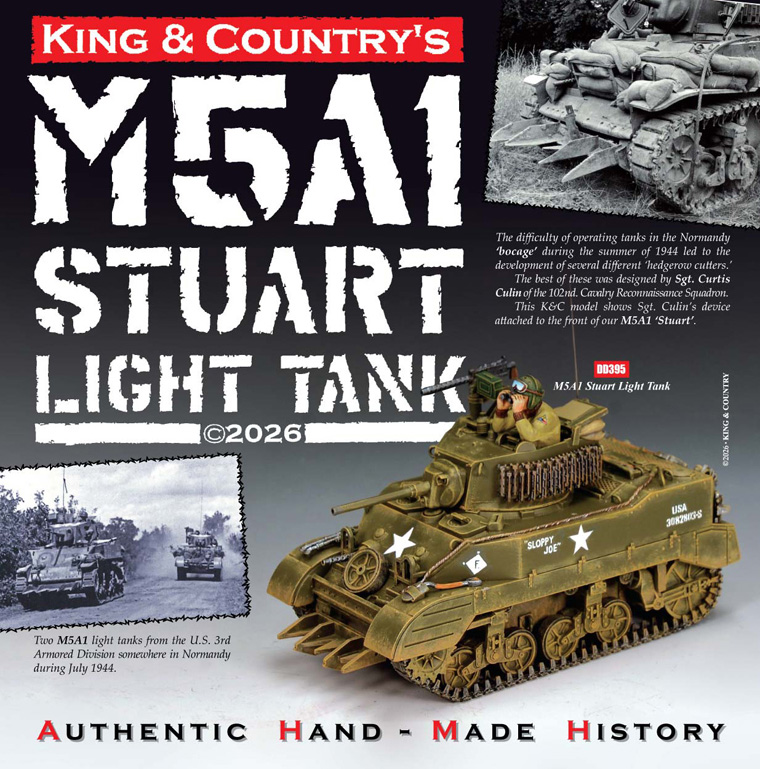
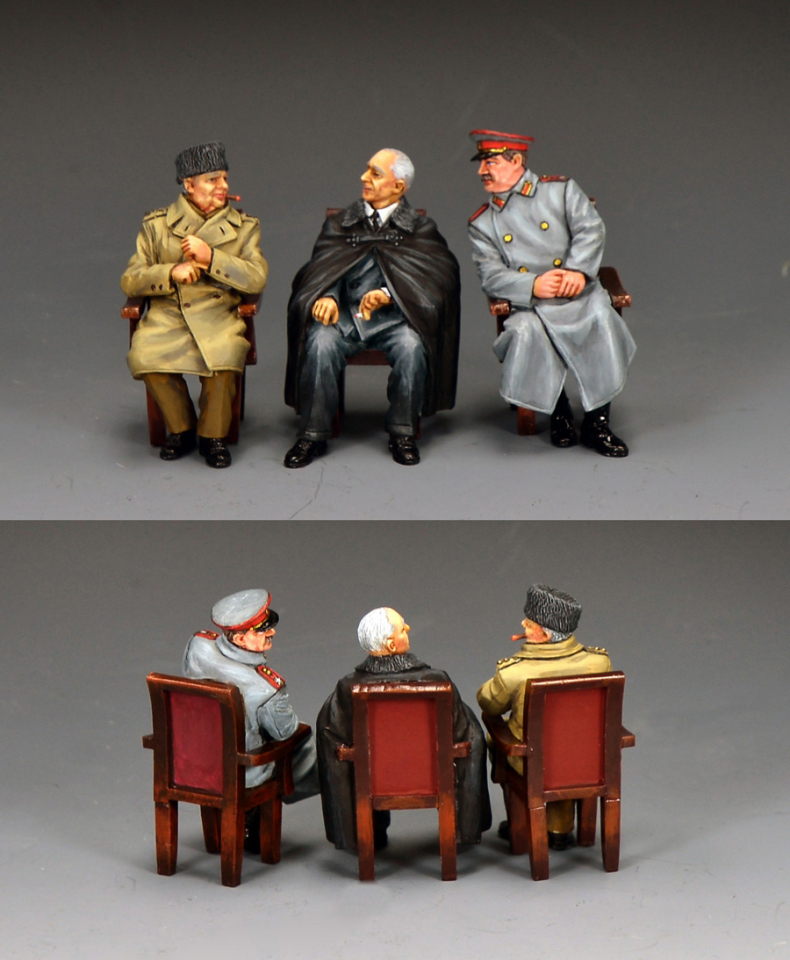
| DD395 ‘The M5A1 STUART Bocage Buster’ The M5A1 Stuart was a U.S. Army light tank that saw extensive action during WWⅡ. This particular K&C model is our fourth representation of the ‘Stuart’ and the best one yet. Armed with a 37mm main gun as well as 3 x 30mm machine guns the M5A1 was primarily designated for reconnaissance, scouting and infantry support duties. Almost 7,000 were produced and they fought extensively in both the European and Asia/Pacific ‘Theatres of War’. Our King & Country ‘Bocage Buster’ has, of course, a quartet of steel forks welded onto the lower front of the vehicle and comes complete with a tank commander figure in the turret. Adorned with the nickname ‘Sloppy Joe’ it will make a very useful addition to any D.Day collection of K&C infantry and armour battling through that dangerous Normandy countryside in the summer of 1944. |
 |
AVAILABLE: Mid July
.JPG)
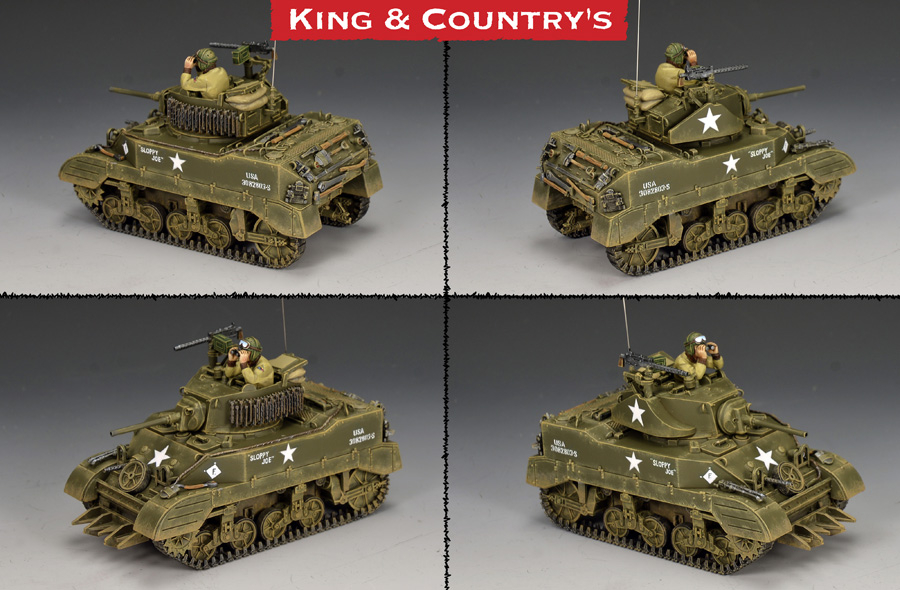
| DD396 ‘YALTA 1945’ The YALTA CONFERENCE was one of the major wartime meetings held between the ‘Big Three’ Allied leaders where they planned the final defeat of Nazi Germany and the post-World War Ⅱreorganisation of Europe. The summit itself took place at the Livadia Palace near Yalta in the Crimea, which was then part of the Soviet Union between February 4-11, 1945. The three key leaders who took part in the conference were Winston Churchill, the British Prime Minister… Stalin, the Supreme Soviet Leader and… Franklin D. Roosevelt, President of the United States. This proved to be Roosevelt’s final wartime conference before his death just two months later on April 12, 1945. Observers at Yalta noted that the President appeared visibly weakened and very ill. While initially celebrated as a triumph of wartime cooperation the political and practical legacy of Yalta faded quickly. Following the conference Stalin failed to honour his promise of free elections in Eastern Europe, instead establishing communist governments dominated by Moscow. Although Churchill was far more sceptical of Stalin’s Yalta promises he could not convince Roosevelt of the Russian dictator’s talent for duplicity and brutality. This all-new sculpt of the three wartime leaders follows on from K&C’s first rendition of ‘The Big Three’ which appeared back in 2012 and was retired in 2016. Since that time we have had literally hundreds of requests to reproduce the original models. In this particular instance we made the decision to produce a brand-new sculpt of the 3 wartime leaders based on another famous photo taken on a different day of the conference. The biggest differences are that Prime Minister Churchill is now wearing his khaki uniform as Colonel of the 4th / 5th Btn. of The Royal Sussex Regiment complete with a heavy wool military greatcoat and a Russians-style fur hat. In our first ‘Big Three’ set Churchill is wearing another of his uniforms, that of an Honorary Air Commodore of the Royal Air Force. Another feature of this new trio of figures is that President Roosevelt himself looks decidedly older and less well that he did previously. In addition his ‘body-language’ suggests that he is leaning more towards Stalin than Churchill. This reflects the fact that in private F.D.R. believed that Great Britain was now a ‘spent force’ and that the future of post war politics globally would be decided alone by both America and the USSR. Stalin meanwhile looks on with faint amusement at both Western leaders… he trusts neither of them but, then again, he trusted no one! |
 |
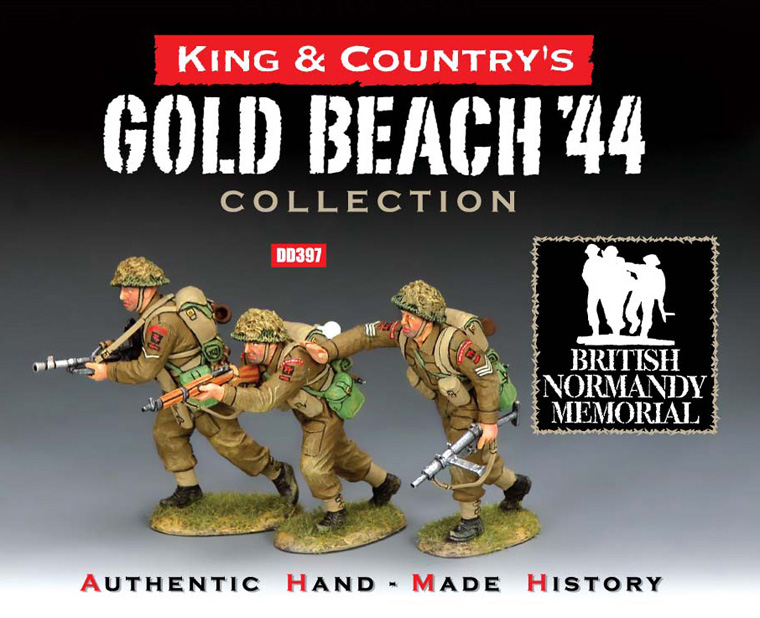
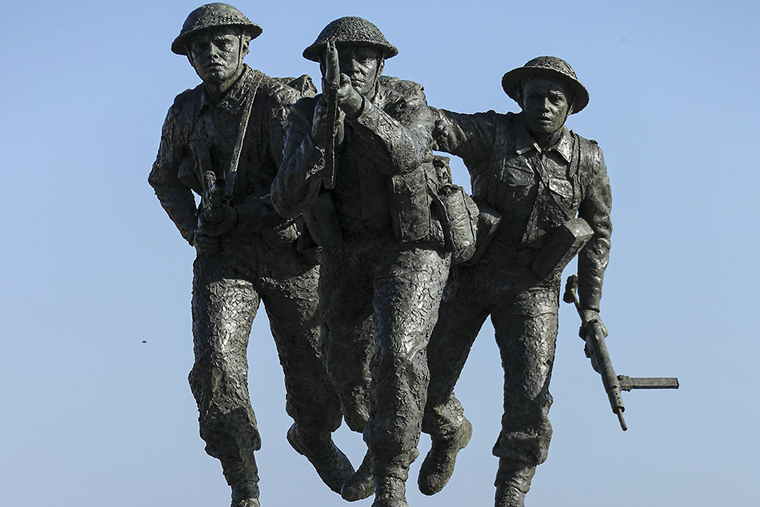
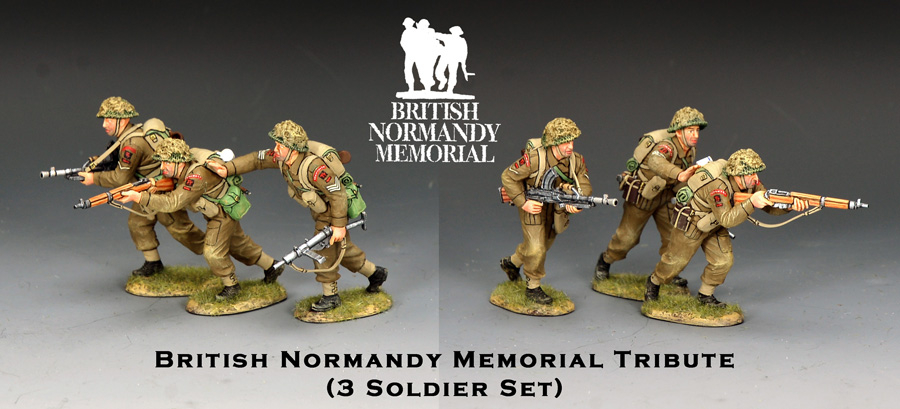
| DD397 ‘The Gold Beach Set’ (3 x figures) In last month’s June ‘Dispatches’ I told collectors and dealers about K&C’s cooperation with ‘The British Normandy Memorial’ and the special Normandy Memorial Trust that was set up to support and help run this uniquely British venture. As many of you already know we also released the first batch of what we’re calling ‘The Gold Beach Collection’ of British Infantrymen ‘badged’ as soldiers of the 6th Btn. of The Green Howards, a vital part of the 50th (Northumbrian) Division which landed on ‘Gold Beach’ on the morning of June 6, 1944. At the same time we also previewed a very special set of three advancing British Infantry moving up the beach towards a German position. These three soldiers have been directly inspired by a magnificent, larger than life-size bronze sculpture of a trio of British ‘Tommies’ coming ashore and charging forward. This amazing sculpture was created by British sculptor David Williams Ellis and stands on a 20-ton triangular granite plinth at the heart of the Memorial surrounded by 160 white stone columns that list the names of the 22,442 British service personnel who died during the Normandy campaign in the summer of 1944. K&C’s rendition in 1:30 scale captures the courage and spirit of the Memorial as the Sergeant, carrying a Sten Gun, encourages a rifleman rushing forward together with a Lance Corporal Bren Gunner providing covering fire. A fine little tribute to an impressive-looking statue at the centre of this magnificent Memorial! |
 |
AVAILABLE: Mid-Late July
B. From France All The Way To The Far East…
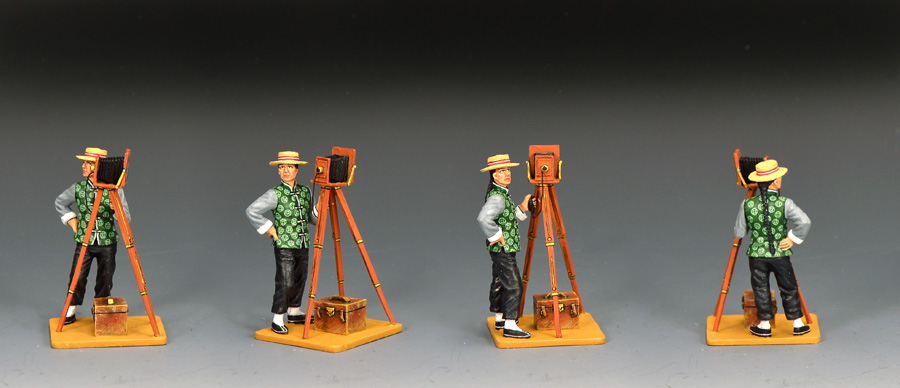
Well, it’s certainly a long way from the beaches and bocage of Normandy to the ever-busy, bustling streets of late-Victorian Hong Kong and the ‘Forbidden City’ of the imperial Ching Dynasty Pekin but we can make it in the blink of an eye…| HK311(G/M) ‘The Hong Kong Photographer’ Over the years, as King & Country’s ‘Streets of Old Hong Kong’ series has grown and developed a major source of inspiration has been a whole library of photographic books documenting in pictures, mostly black and white, the people, places and events that have shaped this amazing city that I am proud to call home. Among my favourite photo books are those that cover the period between 1890 and 1914 when traditional Chinese dress for both men and women was the daily norm. Recording these Hong Kong residents and the clothes they wore as well as their homes, favourite modes of transport and all kinds of other details, both simple and elaborate, were a legion of photographers – some expatriate but the majority local Chinese all with an eye for detail and originality. This latest addition to our ‘Streets’ series portrays a young Hong Kong photographer going about his business. Although dressed in the simple but practical Chinese fashion of the day he still wears his hair long in a ‘queue’. This featured a long braid of hair at the back of the head while the top of the scalp is shaved back. As a nod to modernity this young Hong Kong photographer is also wearing a Western-style ‘Straw Boater’. These hats were a semi-formal summer hat for men and were popular from the late 19th century until the early 20th century. They first arrived in China and Hong Kong on the heads of Westerners as a lighter alternative to the ‘Solar Topee’ or sun helmet. While in some Asian societies the ‘Solar Topee’ was seen as representing foreign colonialism the more modern ‘boater’ was more acceptable and more widely worn by Asians of all classes. Here our Hong Kong photographer is about to take a photo with his glass plate camera mounted on a simple wooden tripod. These vintage, large-format cameras used a coated sheet of glass as the negative or positive instead of flexible film. The entire process required photographers to coat, sensitize, expose and develop the plate – a highly tactile process much-prized today for its exceptional detail and unique aesthetic. On the ground, at his feet, is a large travelling box containing additional glass plates and a selection of chemicals to be utilized in this process. |
 |
C. ‘AT THE COURT OF THE DOWAGER EMPRESS’
In recent years there has been increasing interest among many of our collectors in China for K&C items and figures connected to the Qing Dynasty (1644-1912) the last imperial dynasty to rule over this vast multi ethnic country for nearly three centuries.Much of this interest is focused on the final turbulent decades before the rise of the modern republic.
During that time, the Dowager Empress Cixi was the power behind the throne wielding immense influence among the many competing factions struggling to rule this huge nation.
Because of this growing fascination K&C are happy to reissue a select collection (with some revisions and improvements) to this original and unique series.
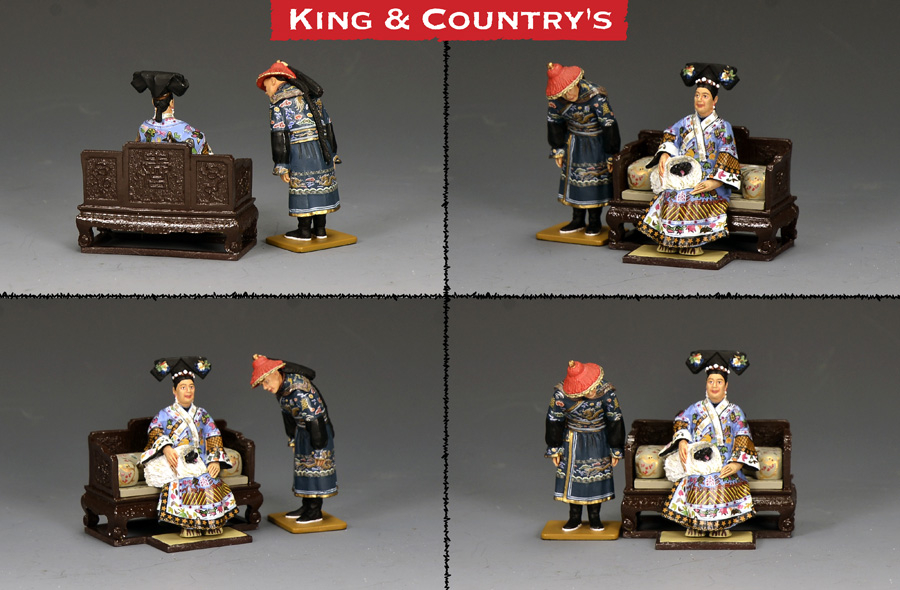
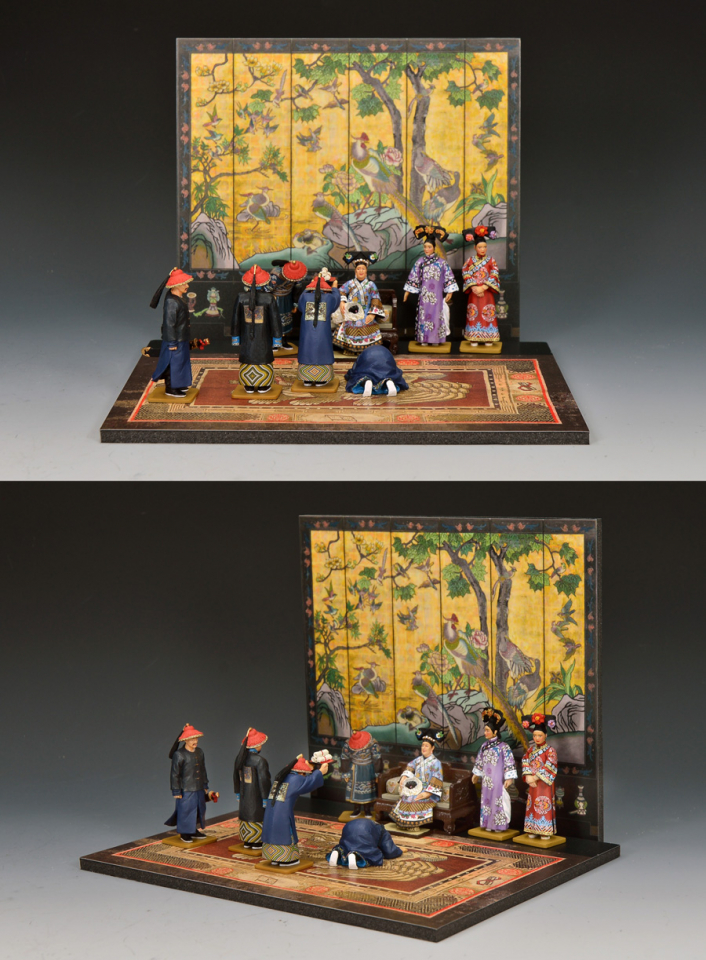
| IC075 ‘The Dowager Empress Cixi’ (2 x figure set) The Dowager Empress Cixi (1835-1908) was a Manchu Noblewoman who controlled the government during the latter decades of the Qing Dynasty as regent from 1861 until her death in 1912. She was succeeded by the future emperor Pu Yi who while still a small child of just two years old was personally chosen by the Dowager Empress herself to sit on the Dragon Throne. Our revised King & Country Dowager Empress can be seen relaxing somewhere in The Forbidden City, with one of her favourite Imperial Pekinese dogs resting on her lap. By her side is one of her many courtiers bringing her some important information. |
 |
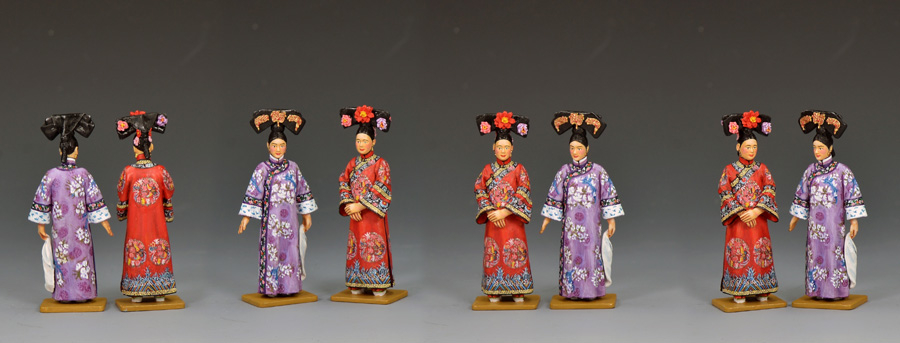
| IC076 ‘The Empress’ Ladies-In-Waiting’ (2 x figure set) A pair of beautifully-dressed and adorned Ladies-In-Waiting, among those, who would be at the Empress’ beck and call, night and day. |
 |
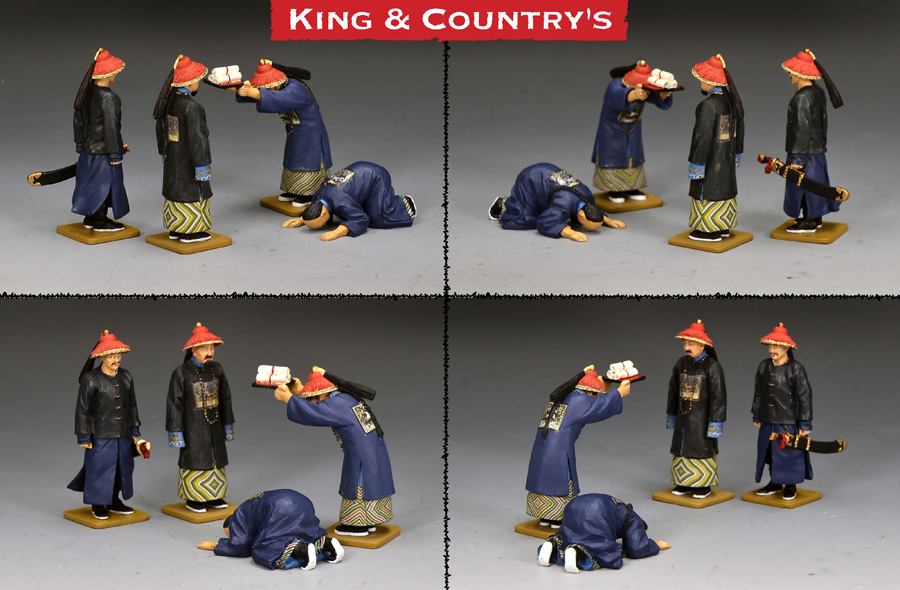
| IC077 ‘Presenting A Petition’ (4 x figure set) A senior member of the Dowager Empress’ household staff is about to receive a petition from a humble Mandarin for the Empress’ consideration. As the standing Petitioner bows forward to hand over the document his kneeling companion ‘kowtows’ on his knees to the Empress’ representative. An imperial bodyguard completes this 4 x figure set. |
 |
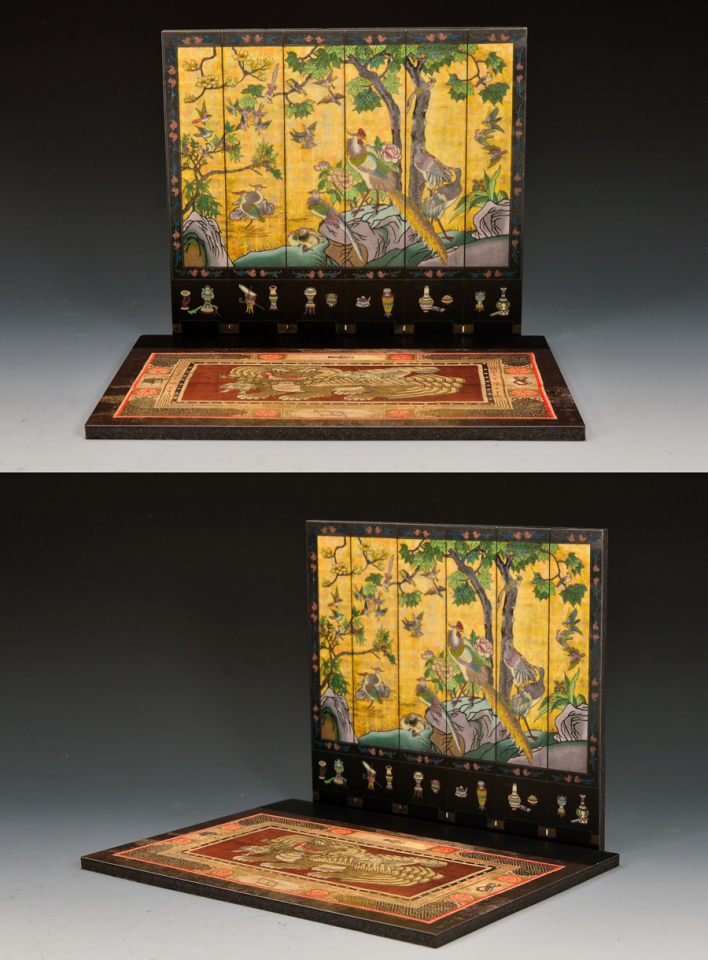
| SP133 ‘The Imperial Display Board’ To present these strikingly colourful figures and display them to their best advantage K&C have designed and produced a two-piece special, foam-board panel set that makes the perfect base and backdrop setting for the pieces. DIMENSIONS: Carpet Base: 22cm x 27cm Chinese Screen Backdrop: 17cm x 19cm |
 |
| IC-S01 ‘The Dowager Empress Complete Combination Set’ Buy all of these items at the same time and receive a ‘special-price’ that includes The Imperial Display Board Free of Charge. |
 |
AVAILABLE: Mid-Late July
D. ‘The Luftwaffe Musikkorps’
And now for something completely different….jpg)
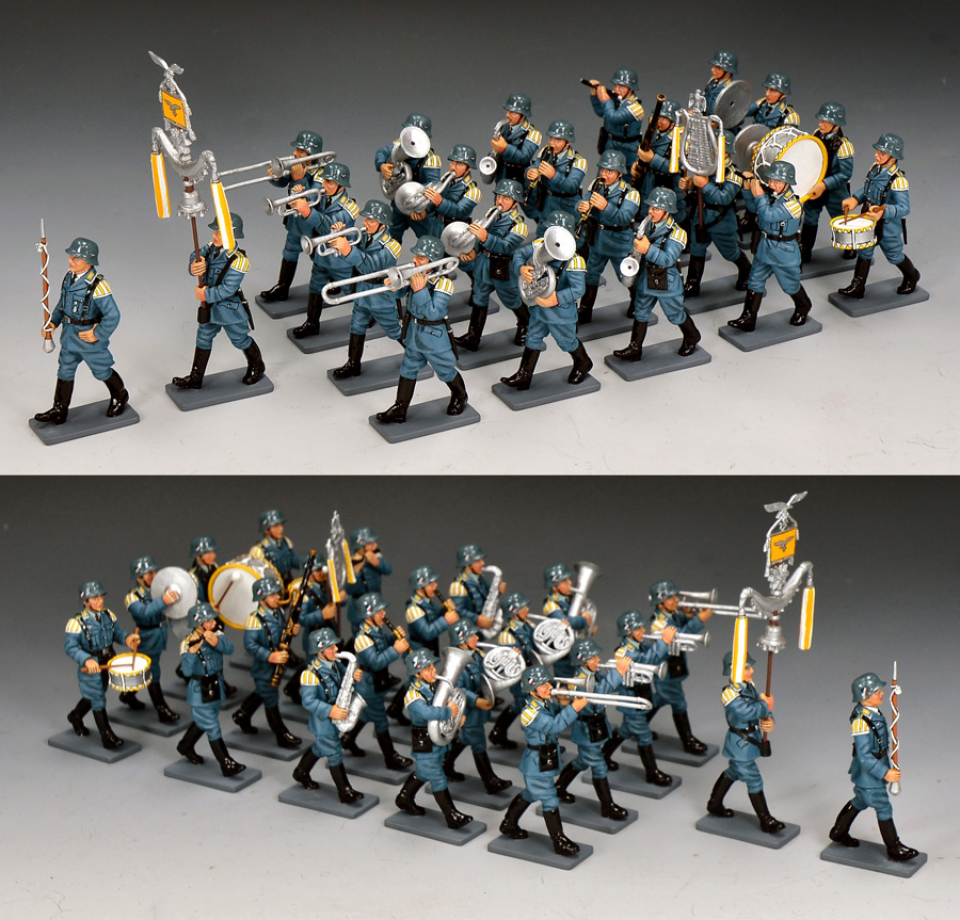
| LW093 ‘The Luftwaffe Musikkorps’ Almost everyday K&C receives requests, suggestions and other ideas covering a wide range of different subjects from collectors not just in China but from almost every country and continent around the world. Earlier this year we came across a suggestion from one particular collector of our aircraft models and aviation-related figures that we talked about and decided would be fun to make and here it is…’The Luftwaffe Musikkorps’ Before World War Ⅱand during it, all branches of the German military recognized the many benefits and morale – boosting opportunities provided by an official military band. Within the Third Reich’s Luftwaffe (The German Air Force) these bands played a major role both on the ‘home front’ and on ‘overseas deployment’. In the case of the Luftwaffe’s Musikkorps, it was not an independent combat unit but instead was a regular part of a division or Regimental Headquarters Company. The Luftwaffe Musikkorps also had a wide-spread presence… There was no single ‘Luftwaffe Band’ rather, almost every major branch, regiment and air district had their very own Musikkorps Personnel. A standard band consisted of mostly professional musicians led by a conductor usually known as a ‘Musikmeister’ or even ‘Obermusikmeister’. The size of the bands nearly always depended on the availability of talented musicians. Some small units could muster just a dozen or so musicians while other much larger formations (especially the fighter and bomber gruppes) might have 40-50 musicians (mostly professional but also some talented amateurs). This new King & Country Luftwaffe Musikkorps has 22 marching musicians including woodwind, brass and percussion instruments. This allowed the band to perform marching music, fanfares and even some classical concert repertoire. As can be seen in our photos all of these Luftwaffe Musikkorps musicians are wearing the distinctive blue-grey, Luftwaffe uniforms adorned with the distinctive ‘Swallows Nests’ on both shoulders. In addition, they wear their trousers tucked into tall black leather boots. Headgear for our band is the M35 Stalhelm (steel helmet) painted a pale blue / grey and decalled with the Luftwaffe eagle on the left side. Also included with this band is the regimental ‘Schellenbaum’ known in English as the ‘jingling johnnie’. Although not a musical instrument it was a key feature of many German military bands. |
 |
E. ‘FIGHTING FOR THE ALAMO’
Now, we’re moving away from Luftwaffe musicians in the middle of WWⅡ to a struggle for Texan independence that came to a climax in the early dawn of March 6, 1836 at an old Spanish mission in San Antonio, Texas called… The Alamo.Here are a few more exciting additions to our latest series of figures covering that historic battle…
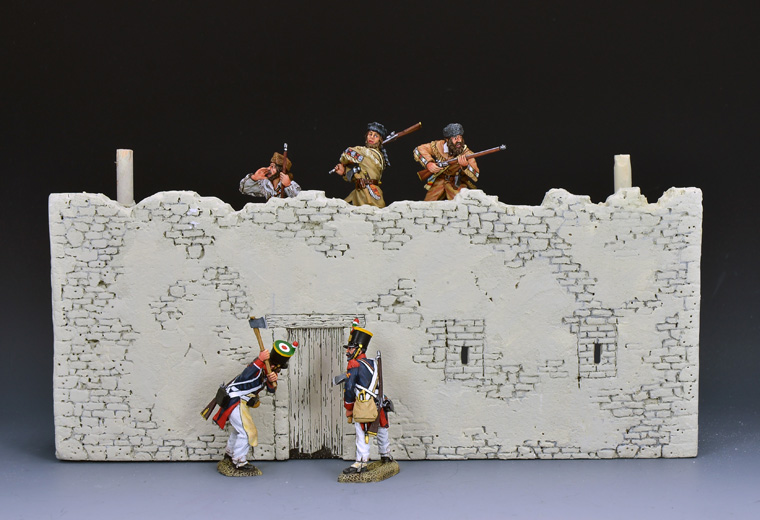
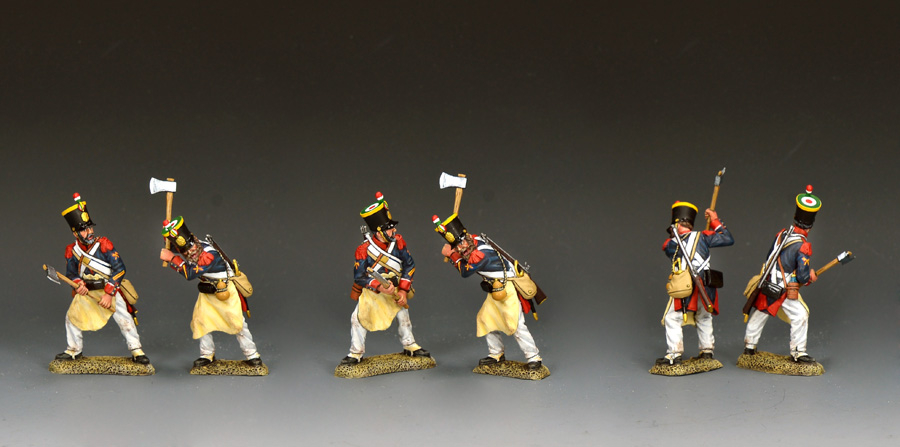
| RTA146 ‘A Pair of Santa Anna’s Assault Pioneers’ These two axe-wielding Mexican military pioneers, also known as ‘sappers’, were the original ‘combat engineers’ of their day who historically marched at the head of an army or infantry column. Their job was to clear away any obstacles or obstructions from the path of advancing or attacking troops. The iconic image of an assault pioneer features a taller than average soldier with a full beard… a heavy leather apron and, of course, a large heavy axe. At the time of the final assault on the Alamo, Santa Anna’s Pioneers were at the forefront of the Mexican infantry hacking their way through the wooden gates and doors embedded in the rough adobe and stone walls surrounding the old mission. |
 |
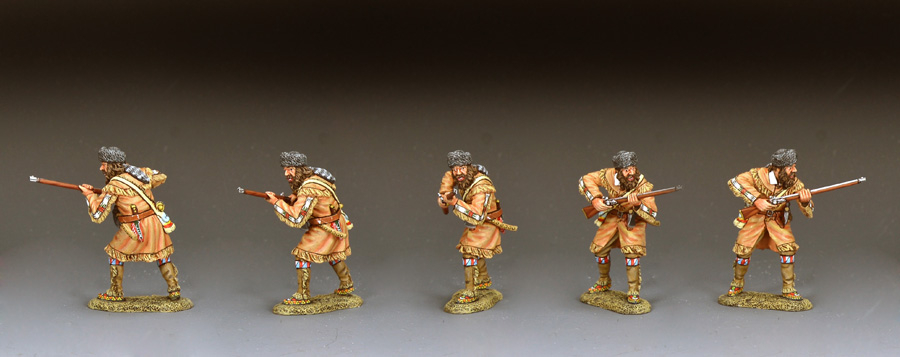
| RTA152 ‘Backwoods Rifleman’ Among the 200 or so defenders of the Alamo on that last early morning in 1836 were men from many different places, backgrounds and skills including several backwoodsmen from the hills of Tennessee. Here is one such example preparing to meet the enemy. |
 |
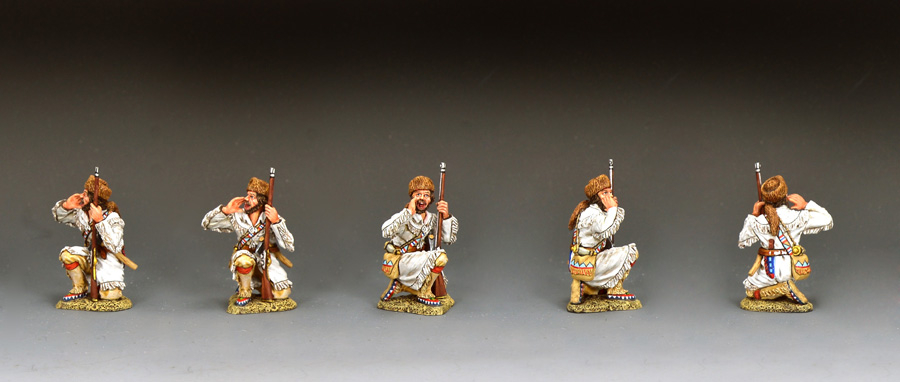
| RTA153 ‘The Shouting Sentry’ Another Tennessean, one of Davy Crockett’s men, is on sentry duty when he hears the Mexican battlecries. Here he raises the alarm to awaken his still-sleeping comrades. |
 |
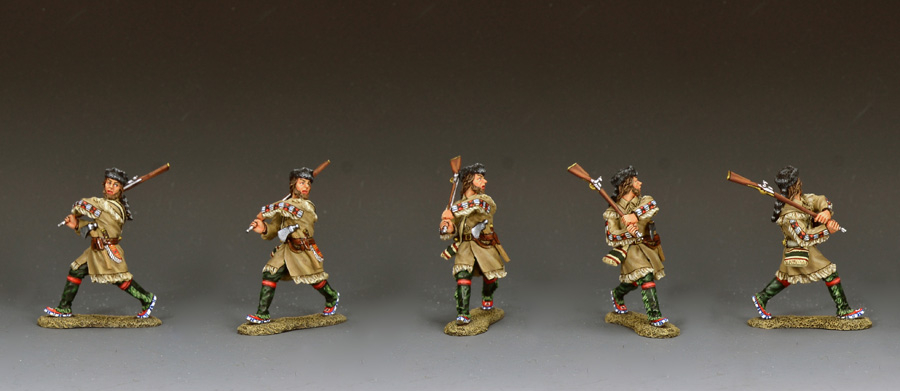
| RTA161 ‘Fighting Backwoodsman’ Elsewhere, at a different part of the Alamo’s defense works, the first Mexican Infantry have already scaled the walls… This buckskin-clad defender has fired his last shot and swings his rifle as a club to batter an enemy soldado! |
 |
SPECIAL NOTE: There are many more Alamo Defenders already in the works as well as all-new Mexican mounted Lancers. Look out for all of them in a few months’ time.
F. ROYAL WIVES & ROYAL RIVALS
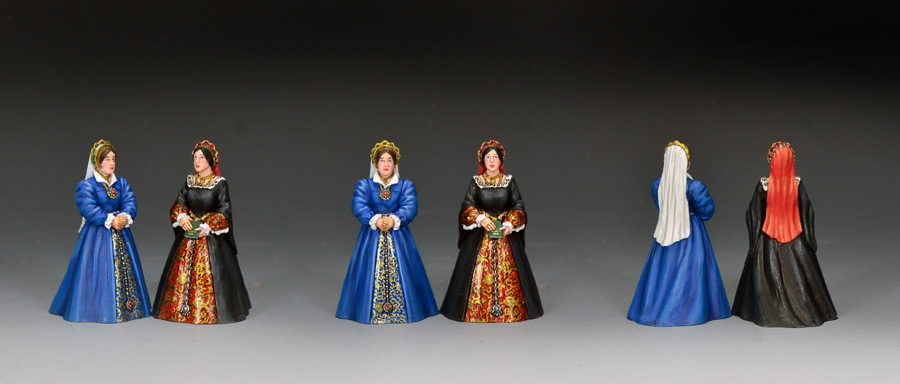
Following the success of our recent King HenryⅧ and two of his most famous wives it was almost a foregone conclusion that K&C would produce the other four Royal Spouses to complete this particular Royal grouping.Well, without further ado, here they are in two, 2 x figure sets…
.JPG)
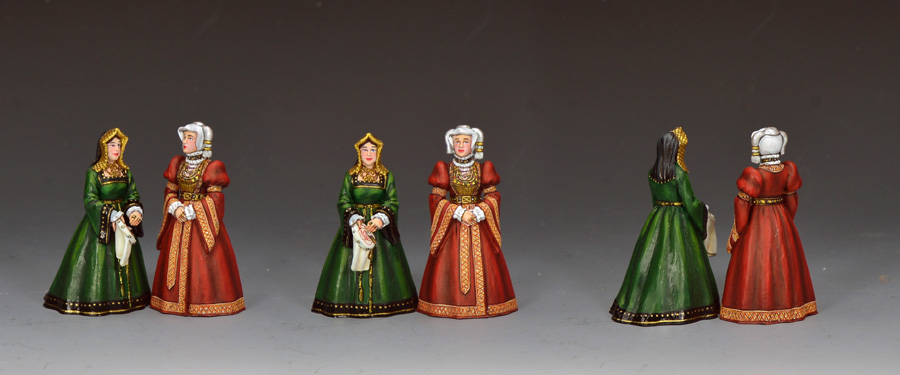
| TR022‘Katherine of Aragon & Anne of Cleves’ Katherine was a Spanish princess and Henry’s first wife and also the widow of his older brother, Arthur. After 24 years of marriage and the birth of their daughter, Mary, Henry annulled the marriage in order to pursue Anne Boleyn. When the Pope in Rome refused Henry’s wish for an annulment he simply left the Church of Rome and decided to set up his very own Church of England which in turn triggered the English Reformation. Anne of Cleves was Henry’s fourth marriage and the only one to be unconsummated which led to a very swift ending after just six months. Anne also happily accepted the marriage annulment when it swiftly came. This certainly gained the King’s favour and ensured both her life and a generous settlement that included her own home, Hever Castle. |
 |
| TR023 ‘A Tale of Two Catherines’ Catherine Howard & Catherine Parr Henry’s marriage to Wife #5, Catherine Howard came close to matching the drama of his earlier partnership with Anne Boleyn and this one too ended in tragedy and treason with Catherine being executed after being found guilty of ‘High Treason’. Catherine Parr was Henry’s sixth and final wife and, perhaps, his luckiest. She married him just four months after her predecessor had been beheaded. She went on to outlive him- though only by a year. Add these four Royal ladies to your fine collection and you have a colourful and very royal reminder of one of Britain’s most married rulers… Henry Ⅷ & His Six Wives. And finally, we come to two of the most famous monarchs that ever settled on two very different thrones in the British Isles… |
 |
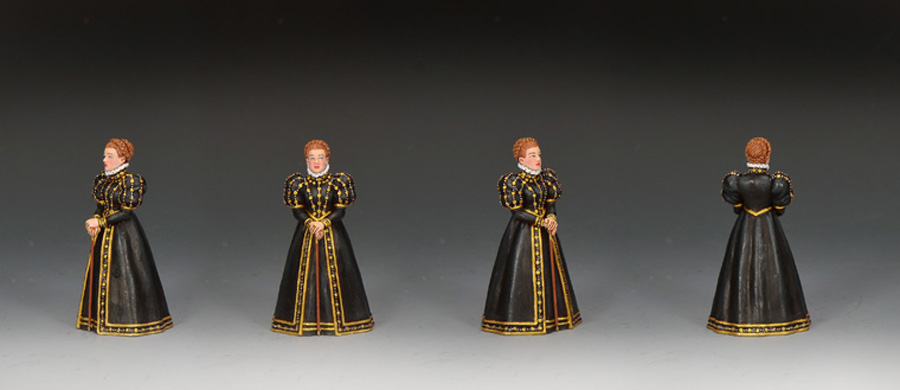
| TR024 ‘Mary, Queen of Scots’ Mary, Queen of Scots (1542-1587) sometimes known as Mary Stuart or Mary 1 of Scotland was Queen of Scotland from 1542 until her forced abdication in 1567. After fleeing to England and throwing herself on the mercy of her Royal cousin, Queen Elizabeth 1 she was placed effectively, in Protective Custody for the next 19 years! Throughout this period she was constantly spied on and, after a time, implicated in a plot against Elizabeth 1 herself. By early 1587, Mary was found guilty of treason and, subsequently, executed. Her cousin and rival, ElizabethⅠ, lived on for another 16 years before dying in 1603. In a sense though, Mary had her revenge… Her only son, James Ⅵ of Scotland eventually became JamesⅠof England upon the death Elizabeth who died unmarried and childless. |
 |
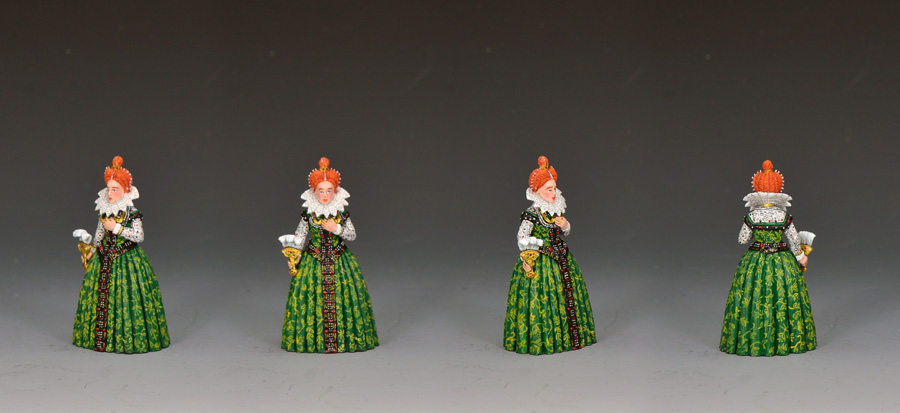
| TR025 Queen ElizabethⅠ, ‘The Virgin Queen’ Elizabeth 1 (1533-1603) was Queen of England & Ireland from 1558 until her death in 1603. She was the last and longest reigning monarch of the House of Tudor. Her eventful reign and its effect on history and culture gave her name to the first ‘Elizabethan Era’. Elizabeth was the only surviving child of Henry Ⅷ and his second wife, Anne Boleyn. During her long reign she accomplished many great successes including the defeat of the Spanish Amada and the expansion of England’s overseas colonies and trade through exploration and… piracy. Simultaneously, she established the Church of England as a moderate Protestant institution striking a balance that curbed religious persecution and brought a degree of stability to a deeply divided nation. In addition the ’Virgin Queen’ ushered in an ‘Elizabethan Golden Age’ where culture and literature bloomed and play rights such as Shakespeare and Marlowe revolutionized English theatre for the benefit of the entire world. |
 |
2. BEING RETIRED THIS MONTH…
This month’s retirals have a distinctly Napoleonic flavour about them plus… a little hint of Medieval times too!Now read on –
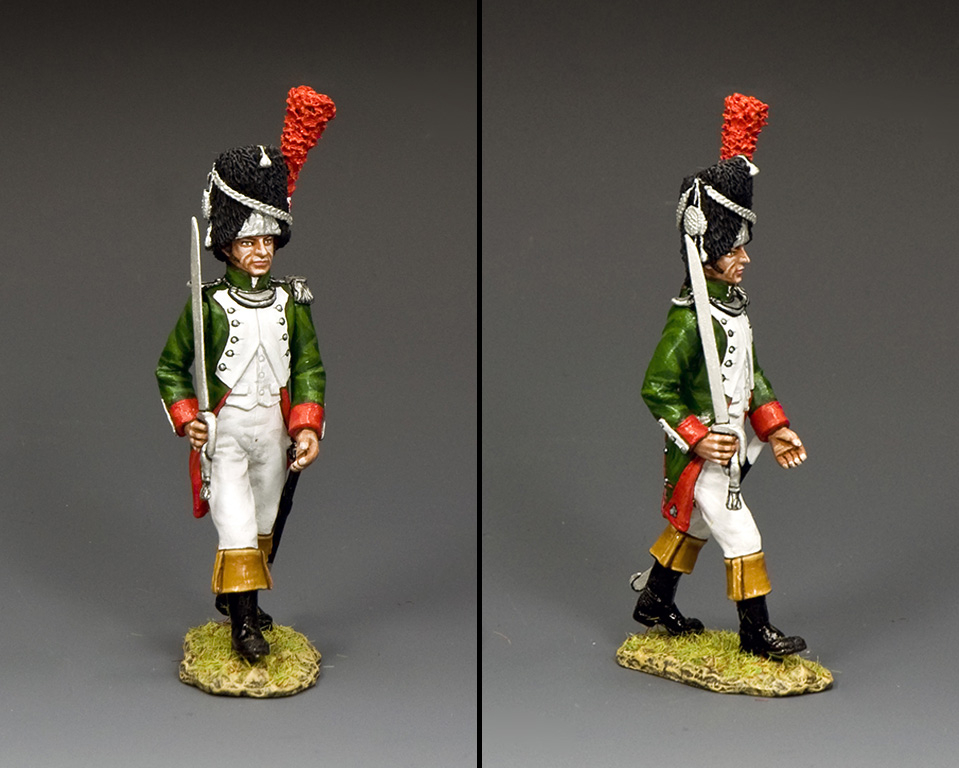
Our first batch of Napoleonic retirals incudes a unique regiment of elite soldiers that were Italian in origin but French in style and uniforms. ‘The Royal Grenadiers of The Guard’ were formed in 1804, when Napoleon Bonaparte proclaimed himself ‘Emperor’ of the French Empire. At that time France’s neighbour Italy had been a republic but now became the ‘Kingdom of Italy’ with Bonaparte as its monarch.
As Italy had become a client state of France with its capital in Milan it ruled over most of northern Italy.
This new ‘kingdom’ also had its own army recruited, trained and organized along French military lines.
Included in its ranks were regular Line Infantry, Light Infantry, Dragoons and other Light Horse. In addition, it soon added its own ‘Royal Grenadiers of The Guard’.
These last soldiers owed much to Napoleon’s own ‘Old Guard’ in both military style and uniforms. Most of the recruits had extensive previous military experience before joining and had to be of a minimum height of 1.78 metres or 5’10” tall.
As can be seen here the members of this prestige regiment adopted the drill and musketry techniques of their French equivalents as well as the cut of their uniforms and their tall, black, bearskin caps.
The one big difference is the principal colour of their tunics which was ‘Green’ following the general Italian military fashion.
11 of these Italian ‘Royal Grenadiers of The Guard’ are available… Grab some while you can!
| NA457 “Marching Officer w/Sabre” |
 |
| NA458 “Subaltern w/Regimental Colour” | 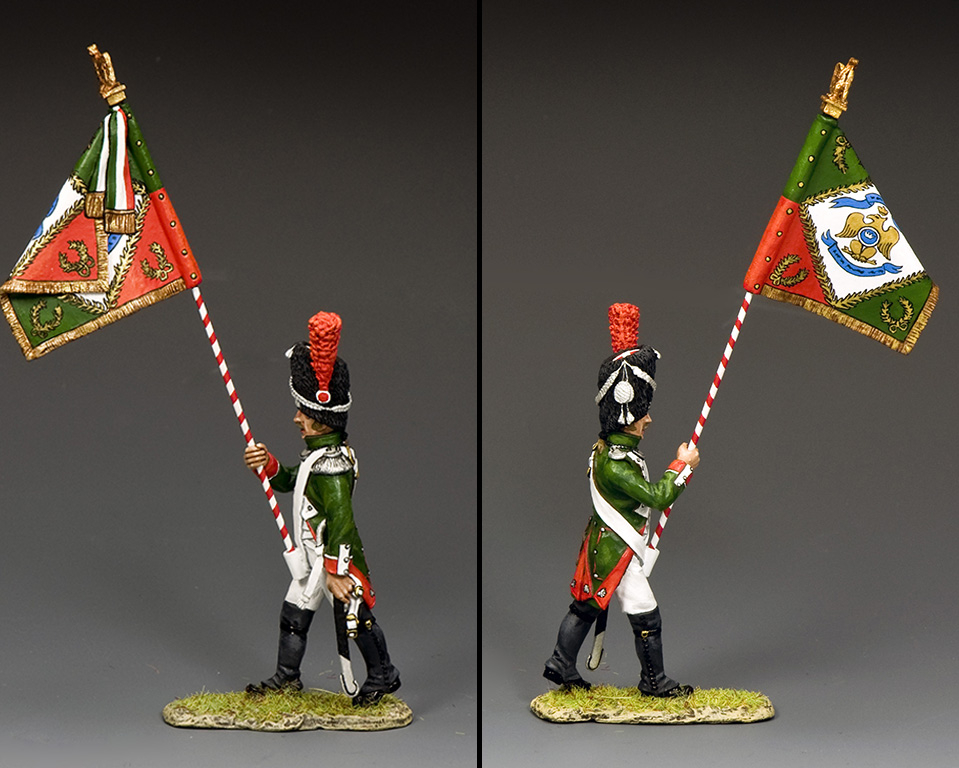 |
| NA459 “Italian Grenadier Advancing” | 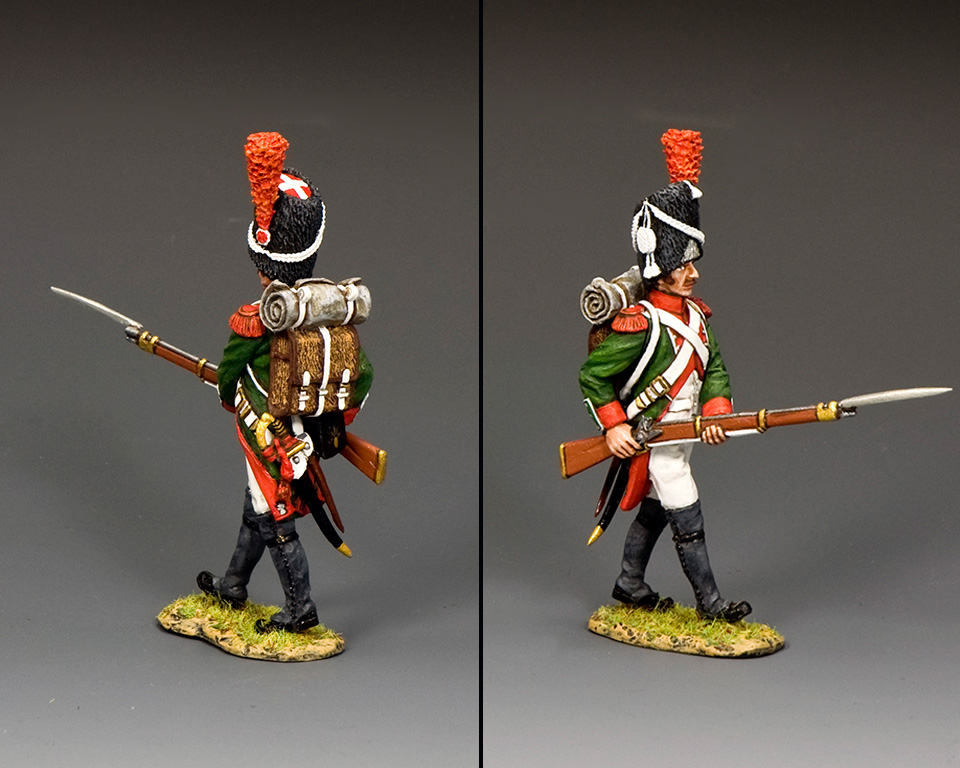 |
| NA460 “Marching Grenadier” | 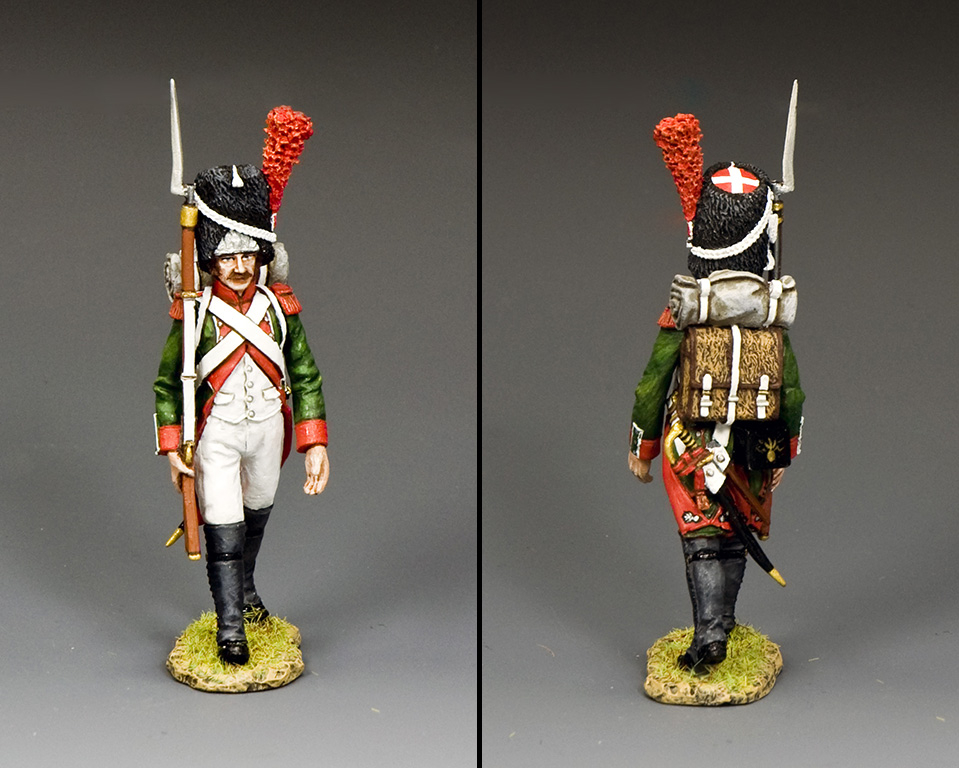 |
| NA461 “Marching Drummer” | 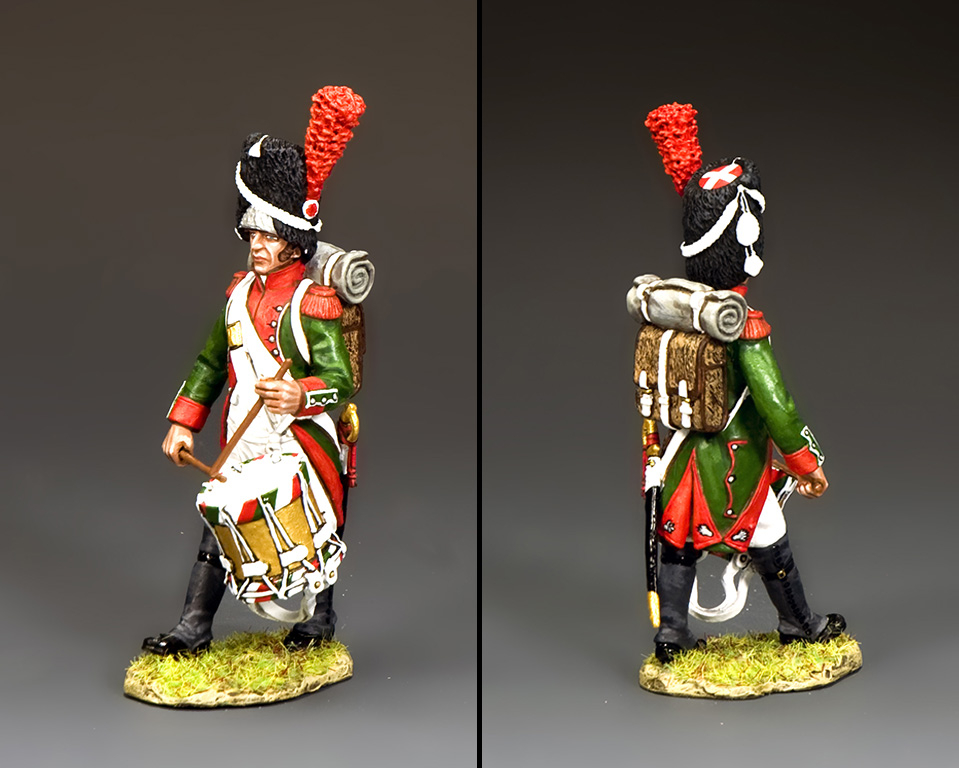 |
| NA462 “Grenadier Officer Saluting” | 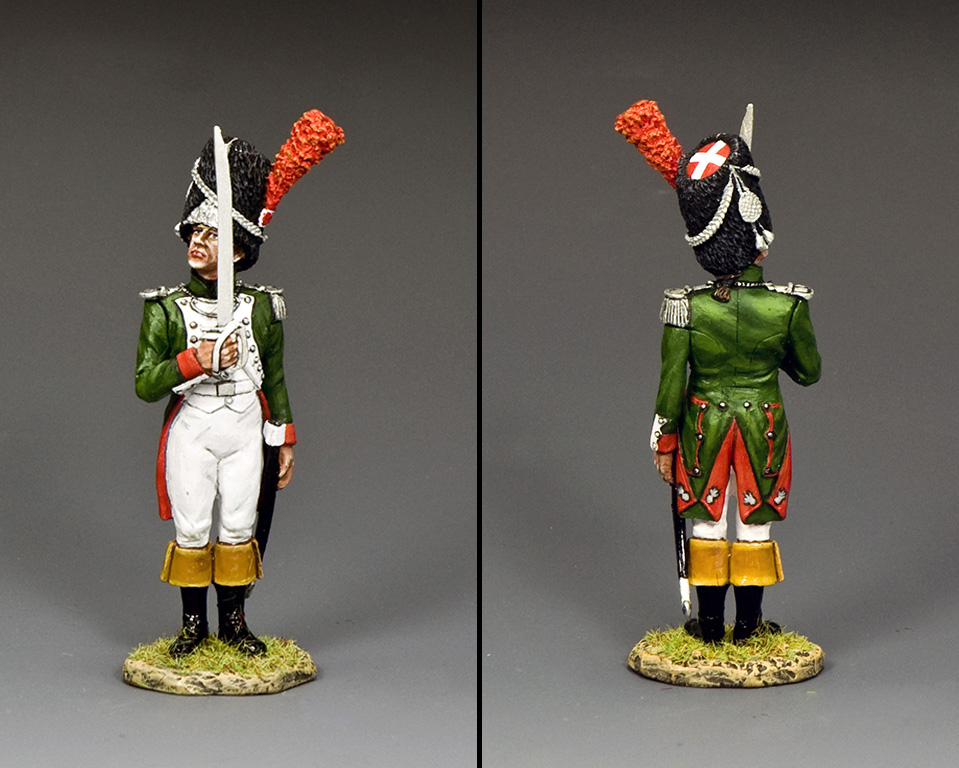 |
| NA463 “Grenadier Presenting Arm” | 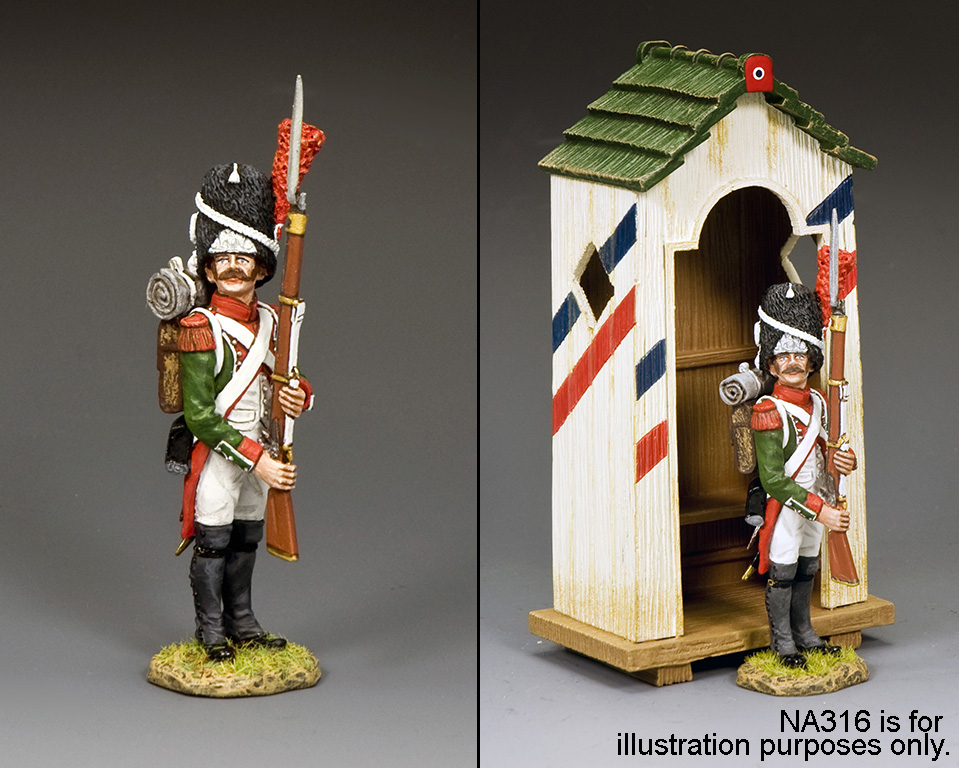 |
| NA464 “Grenadier on Guard Duty” | 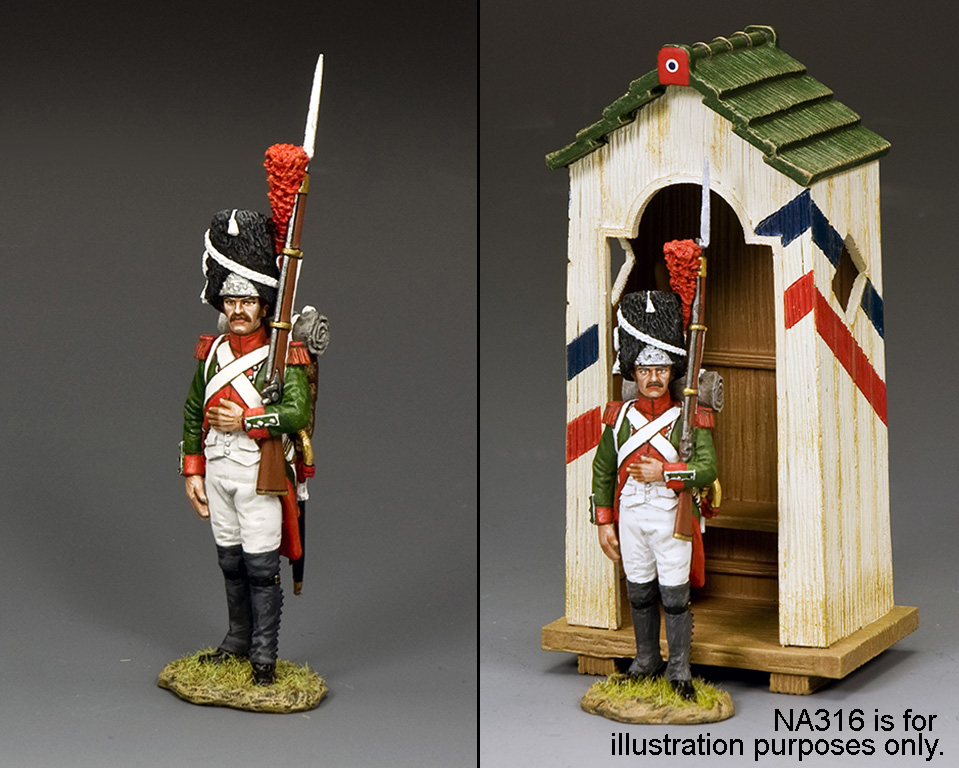 |
| NA465 “Italian Grenadier Kneeling Firing” | 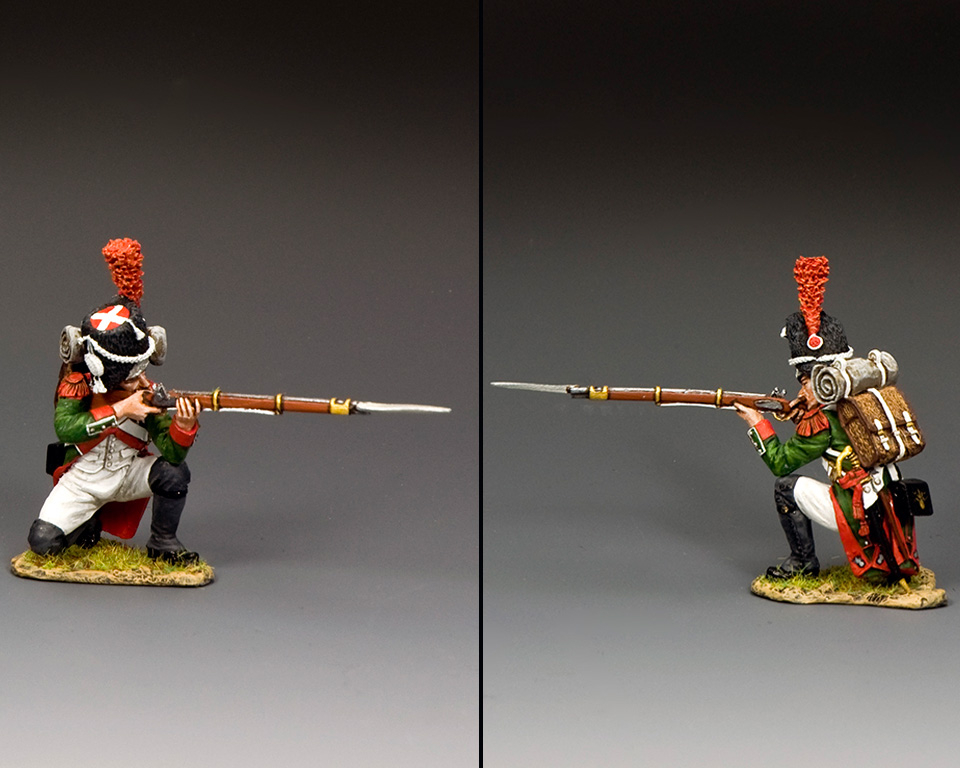 |
| NA466 “Italian Grenadier Standing Firing" | 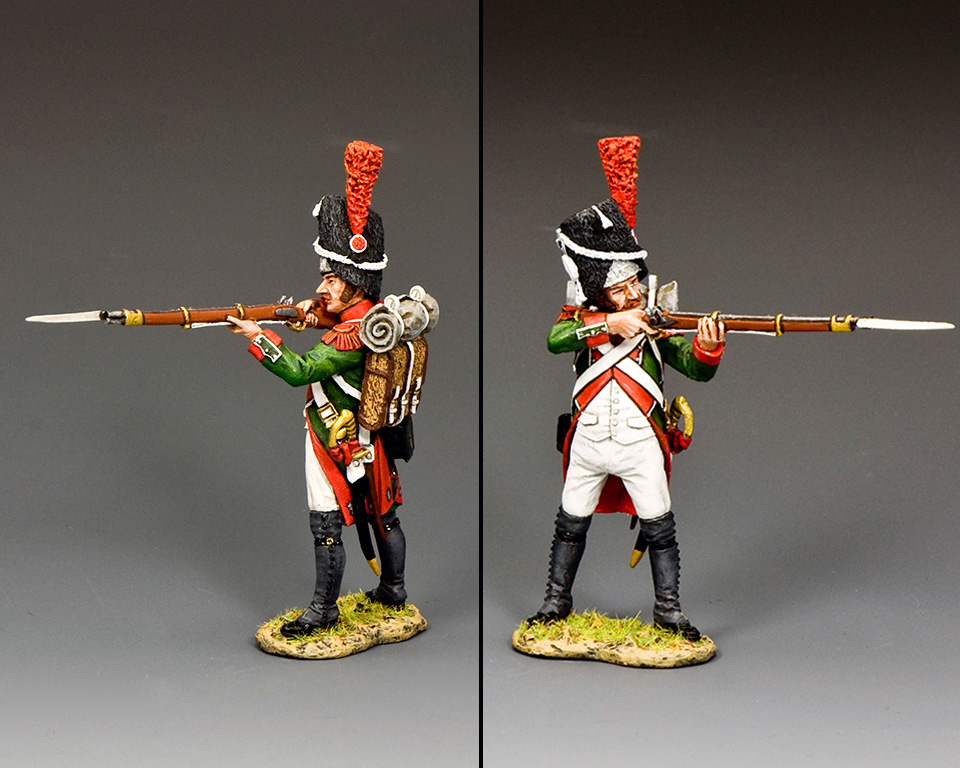 |
| NA467 “Italian Grenadier Standing Firing" | 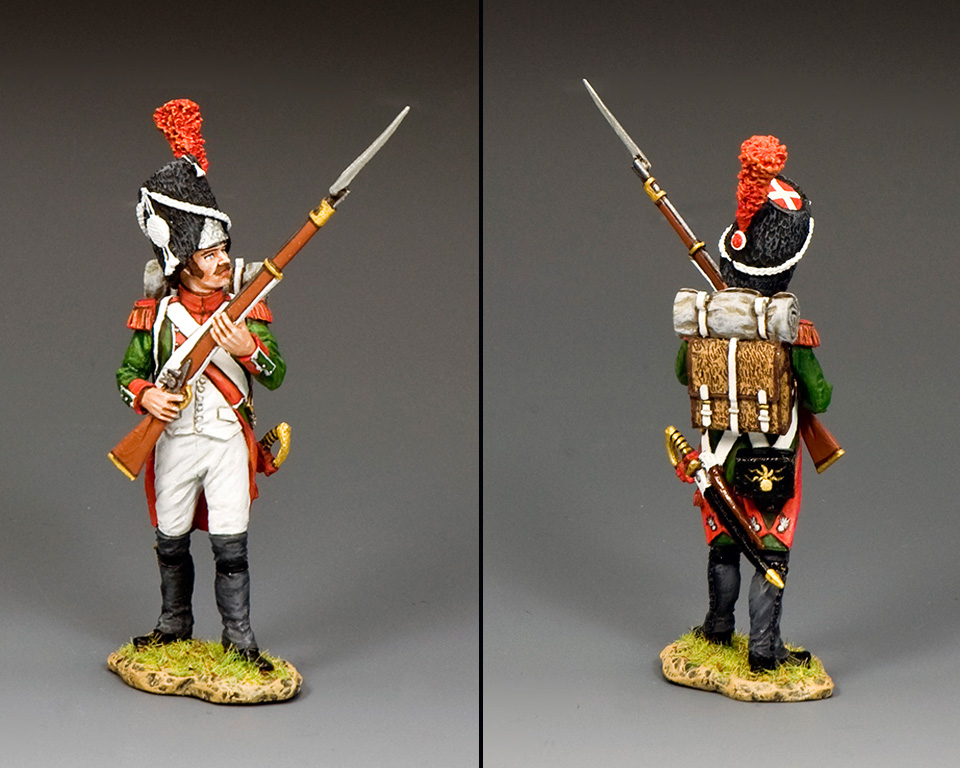 |
| NA468 “Italian Grenadier Marching to the Front" | 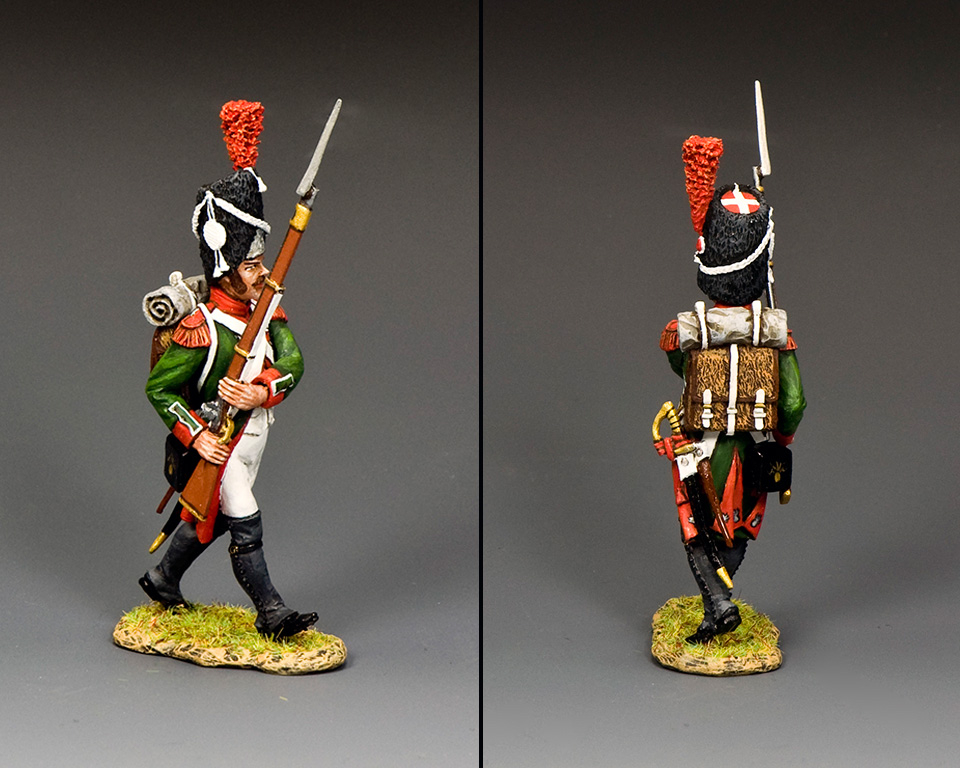 |
Our second group of Napoleonic soldiers being retired are the dismounted fighting men of the ‘Dragons a Pied’ better known as the ‘Foot Dragoons’.
Their story goes back to 1805, when Napoleon was gathering his forces together at Boulogne with a view to invading Great Britain.
To boost the numbers of his infantry he decided to ‘dismount’ several regiments, especially Dragoons, in order to more easily transport them across the English Channel without their horses.
Napoleon surmised that these particular Dragoons would fight on foot until such time as their horses could be ferried across the Channel and they could be then remounted once more.
Alas however, their horses were never returned to them and the now ‘Foot Dragoons’ went on to march and fight on their feet all across Europe and into Russia.
They did however, retain their tall, brass helmets with black horsehair plumes and traditional green tunics of the French Light Cavalry as well as their long dragoon muskets.
While fighting on foot our Foot Dragoons also wore the long, black, canvas
leggings of the French Infantry as well as the traditional French Army infantry back pack.
19 dynamic action poses are available while stocks last.
| NA485 “Mounted Foot Dragoons Officer" | 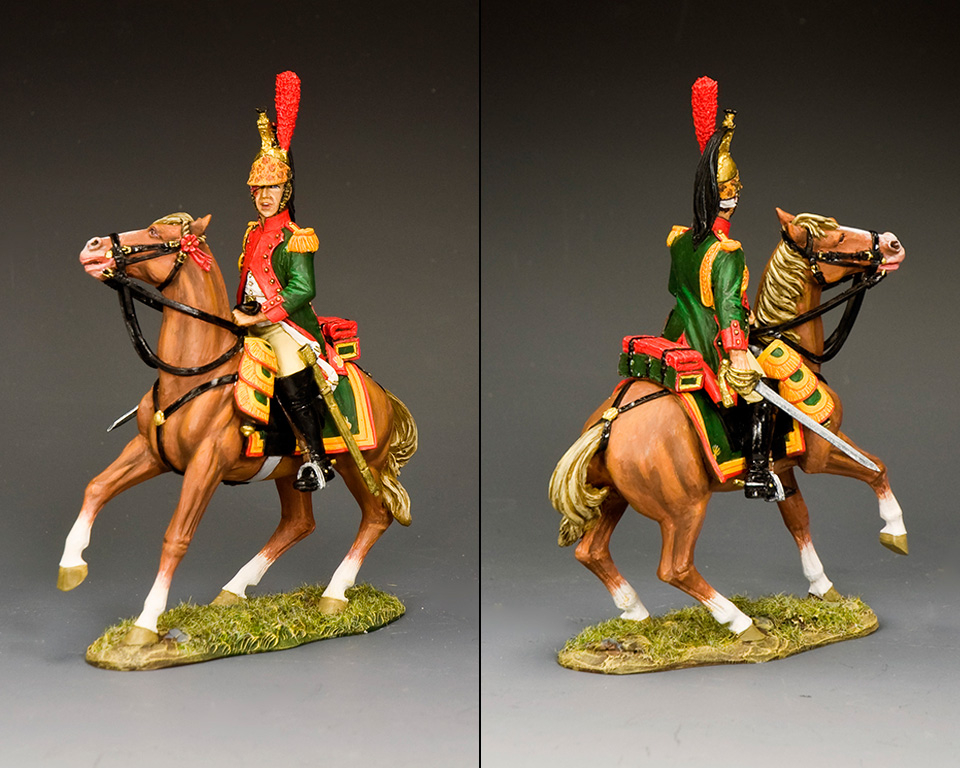 |
| NA486 “Foot Dragoon Loading His Musket" | 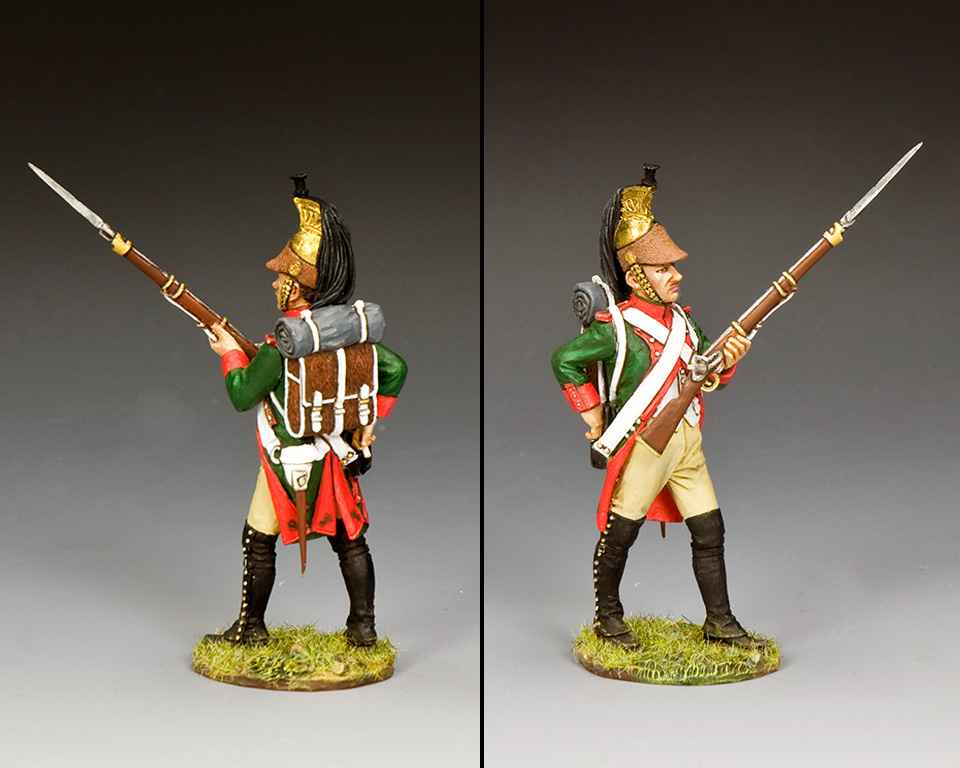 |
| NA487 “Foot Dragoon Loading Musket" | 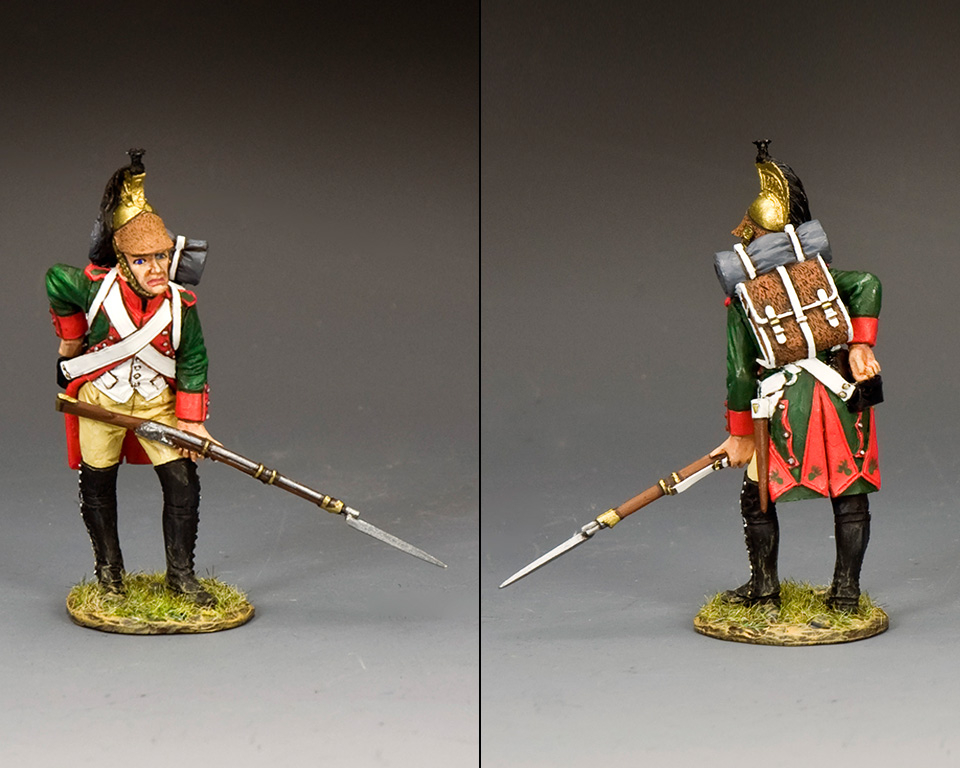 |
| NA488 “Foot Dragoon Standing Firing" | 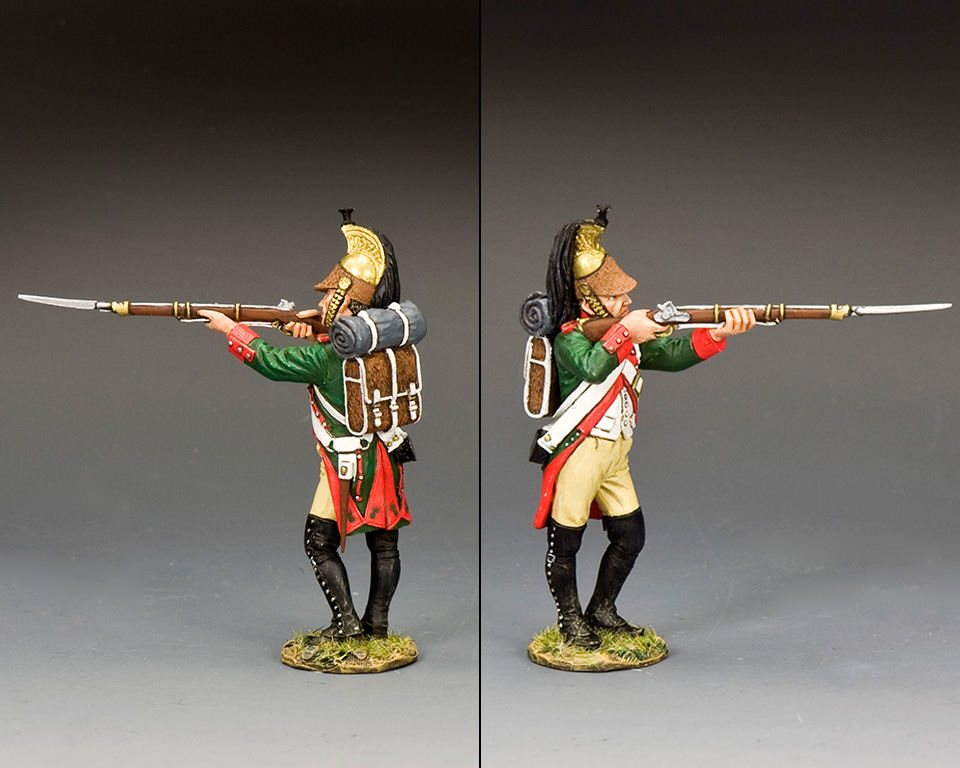 |
| NA489 “Foot Dragoon Kneeling Firing" | 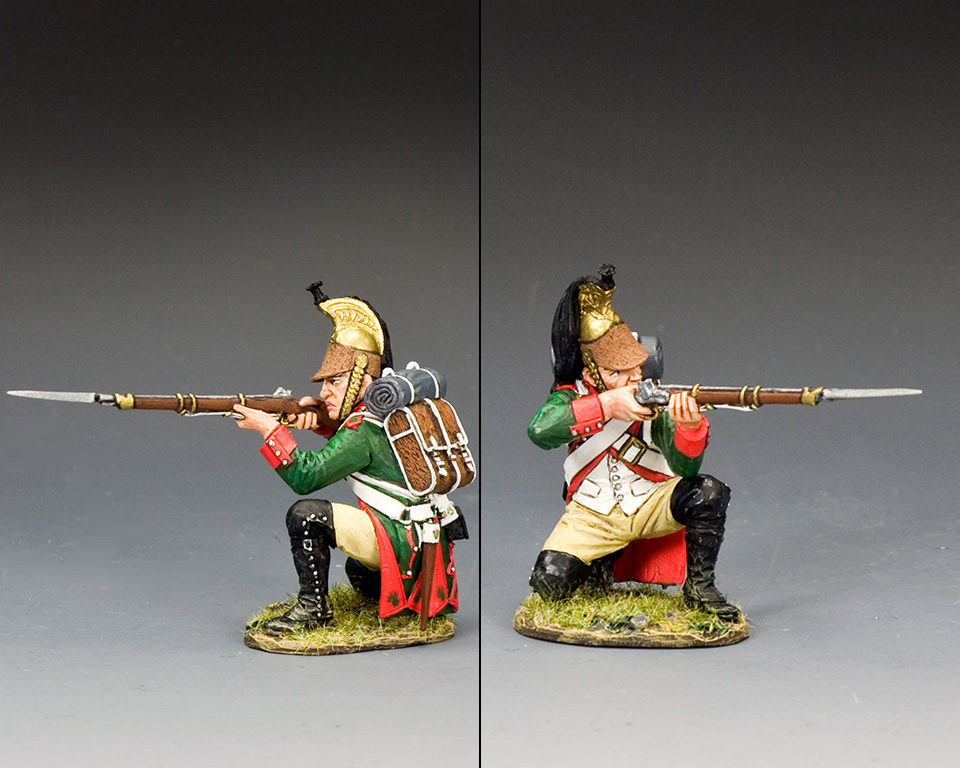 |
| NA490 “Kneeling Dragoon Helping A Comrade" | 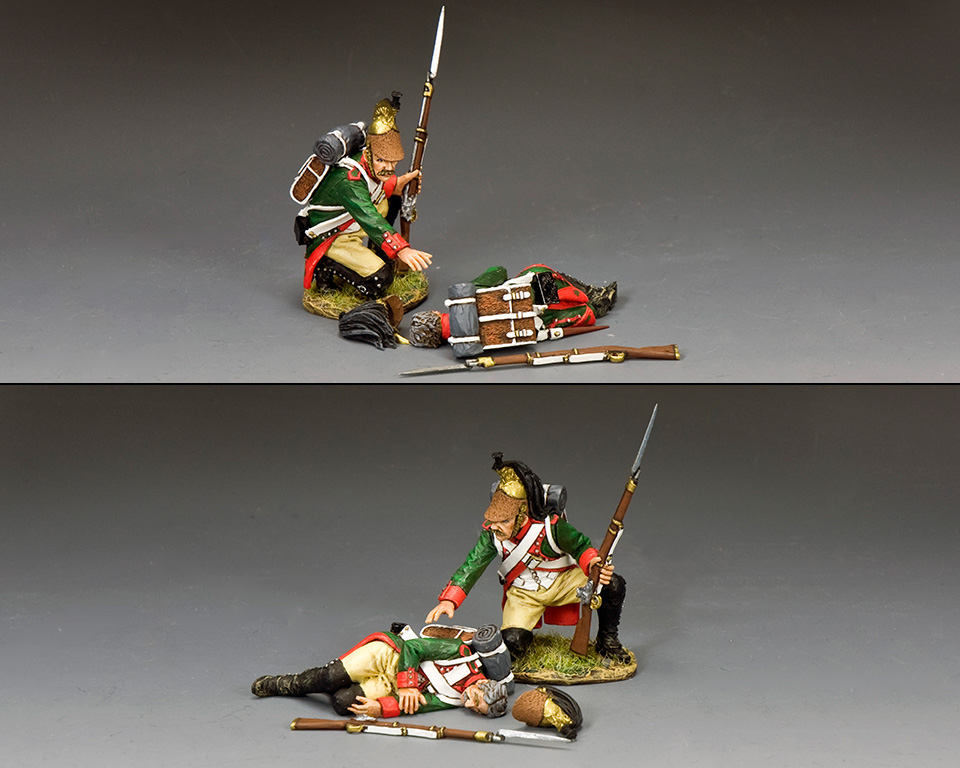 |
| NA491 “Foot Dragoon Charging Forward" | 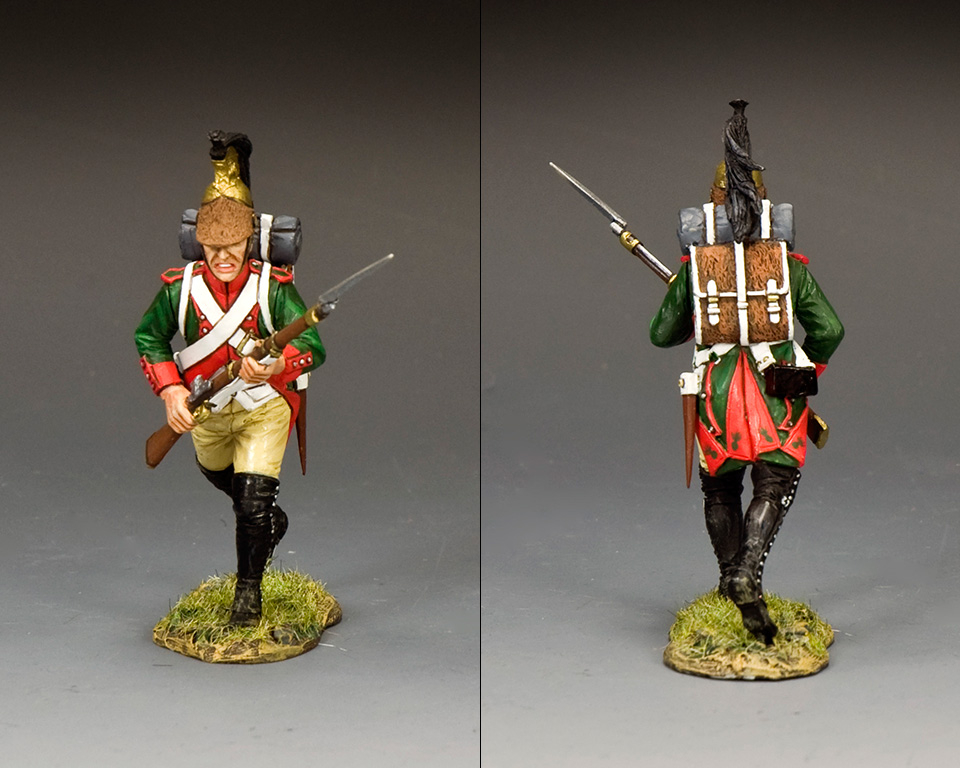 |
| NA492 “Foot Dragoon Biting A Cartridge" | 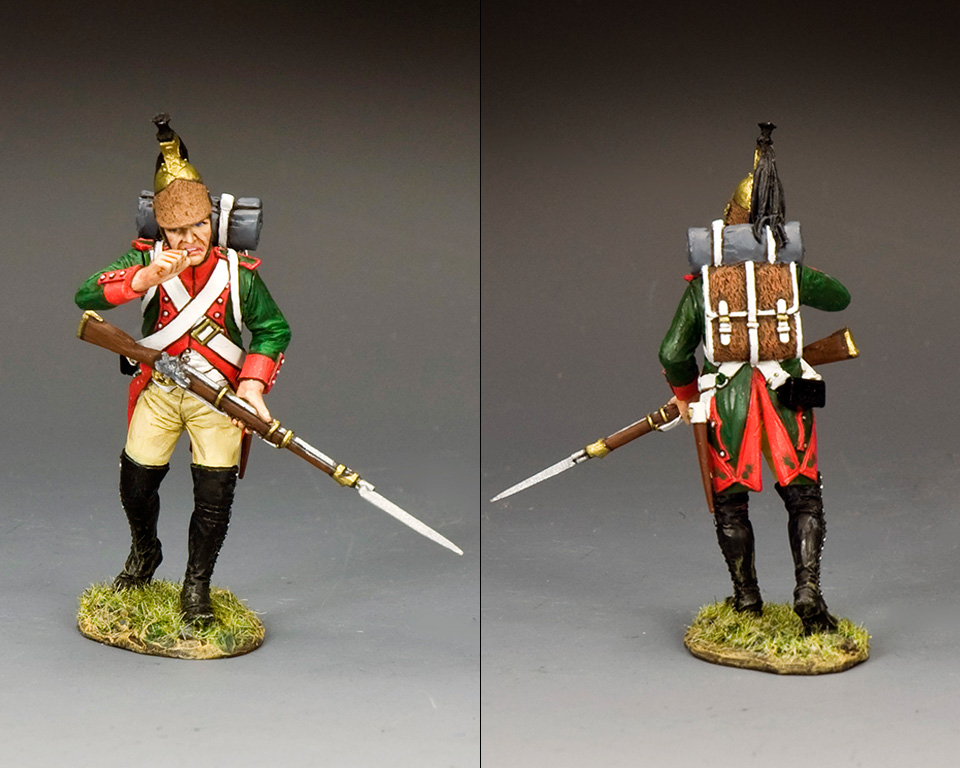 |
| NA493 “Foot Dragoon Standing Ready" | 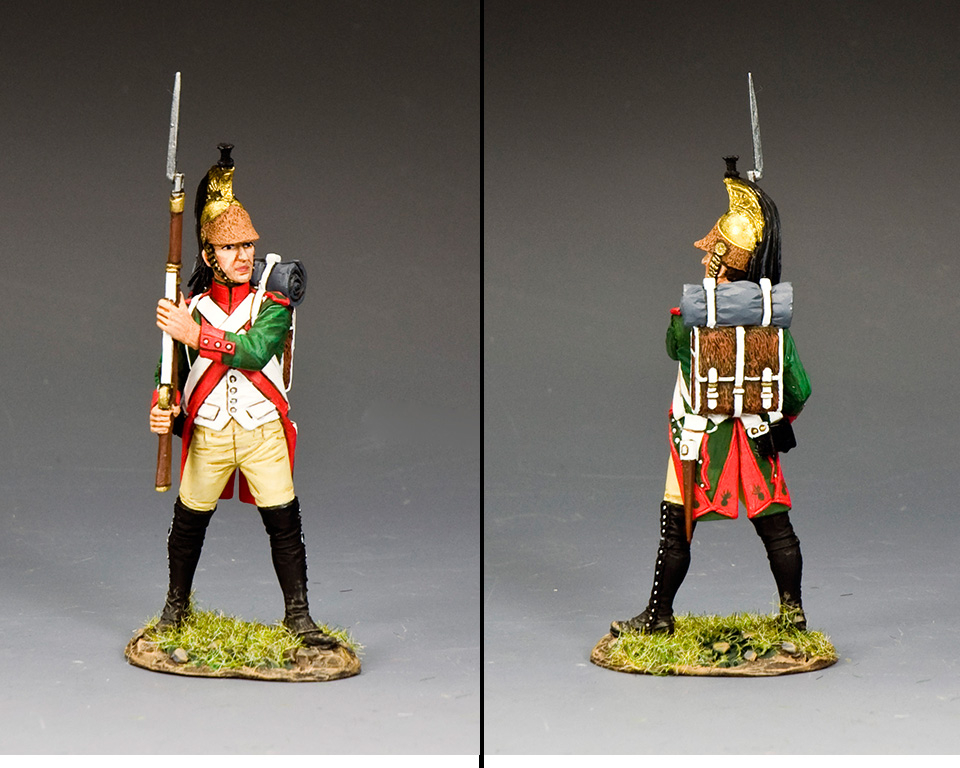 |
| NA494 “Foot Dragoon Advancing Shoulder Arms" | 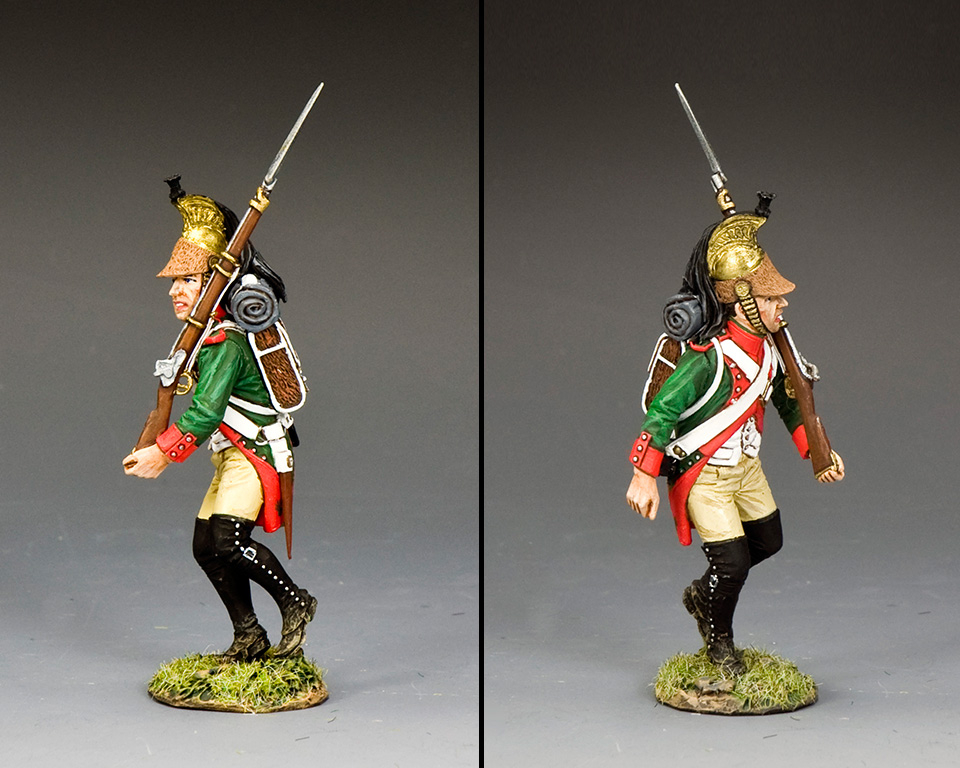 |
| NA495 “Foot DragoonReloading Set" | 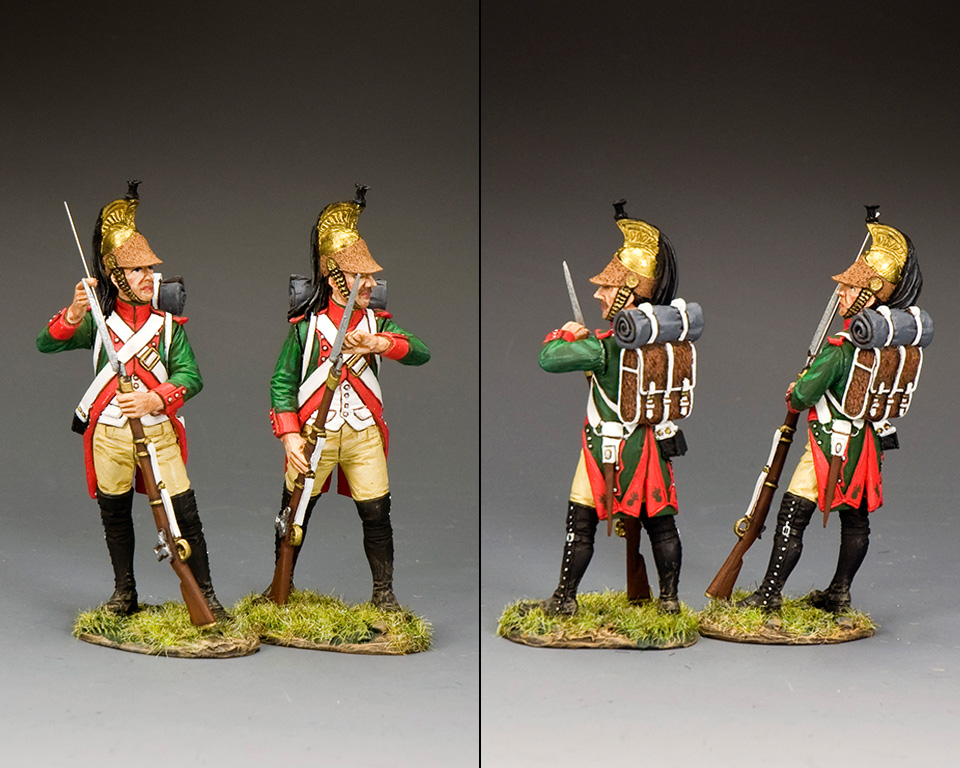 |
| NA496 “Casualties of War" | 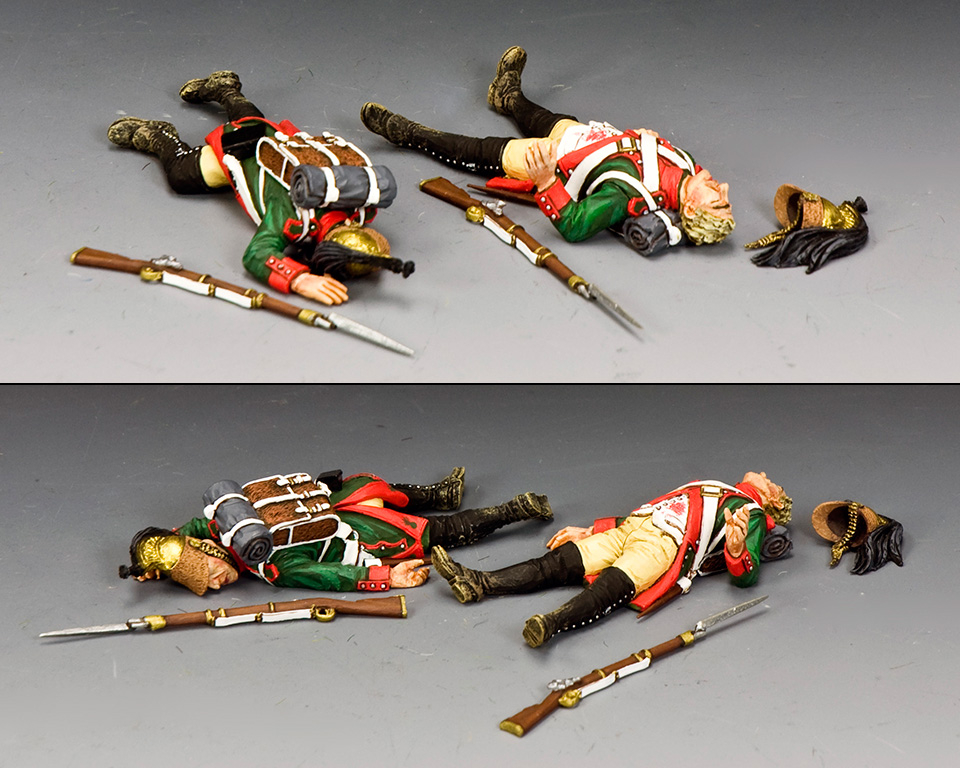 |
| NA497 “Kneeling Foot Dragoons Set" | 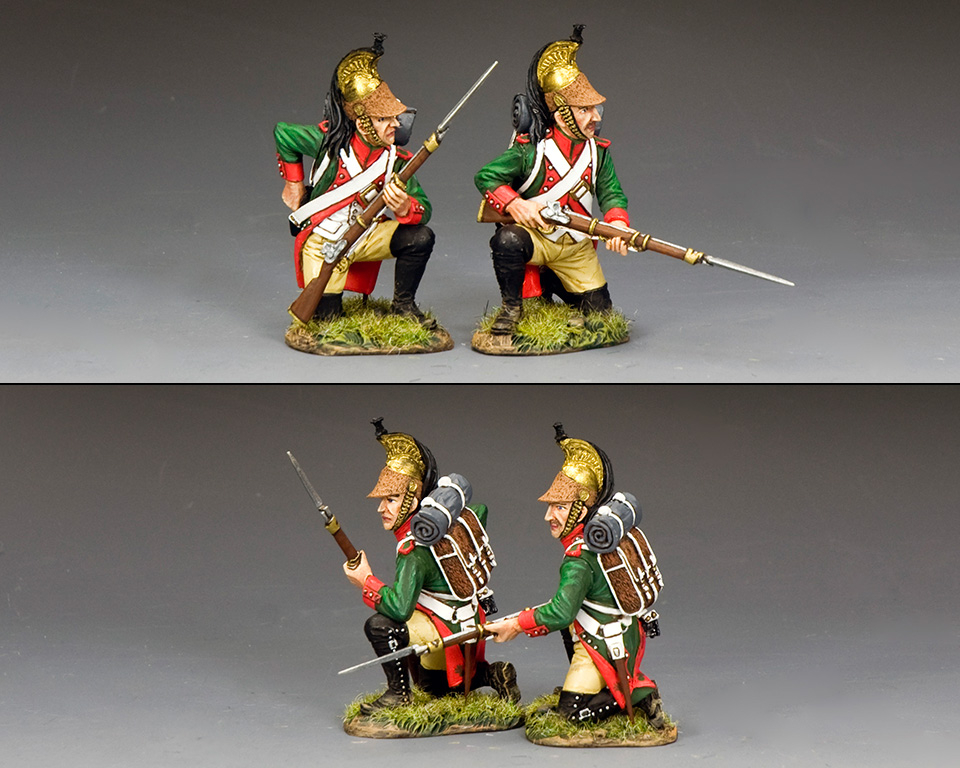 |
| NA500 “Foot Dragoon Running Port Arms" | 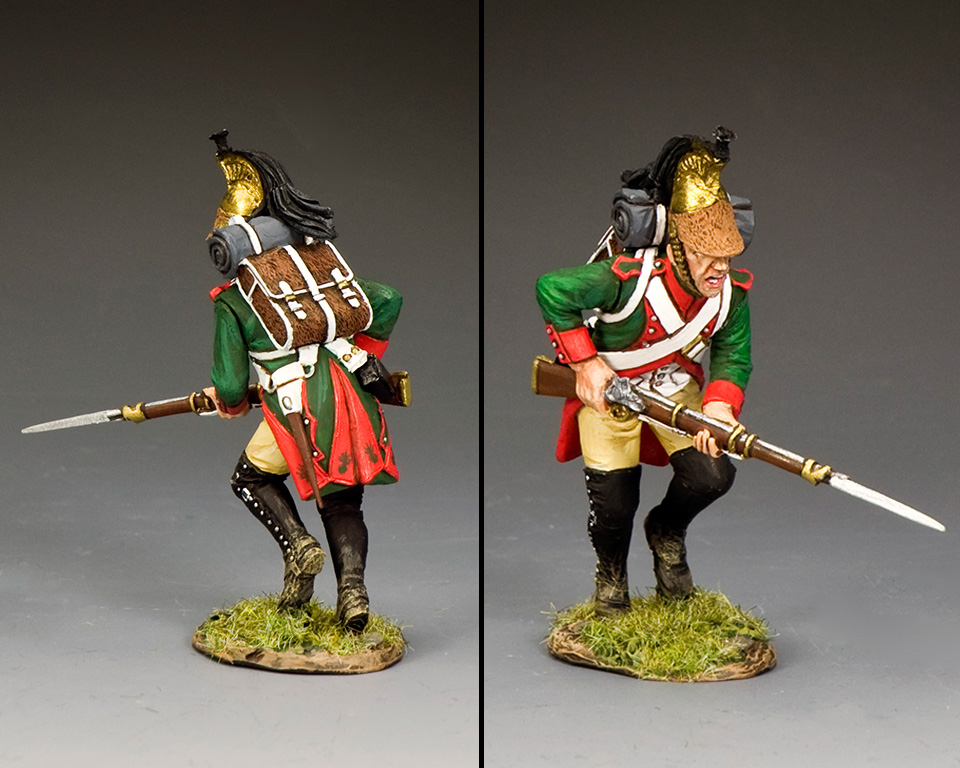 |
Our final retirement this month is the very popular ‘Medieval Castle Façade’ which we introduced in the last quarter of 2025. This excellent value, easy to pack and assemble piece is a great ‘backdrop’ for any medieval collection and… outstanding value!
We still have a handful remaining so pick up one while you can.
| SP130 “The Castle Facade Backdrop" | 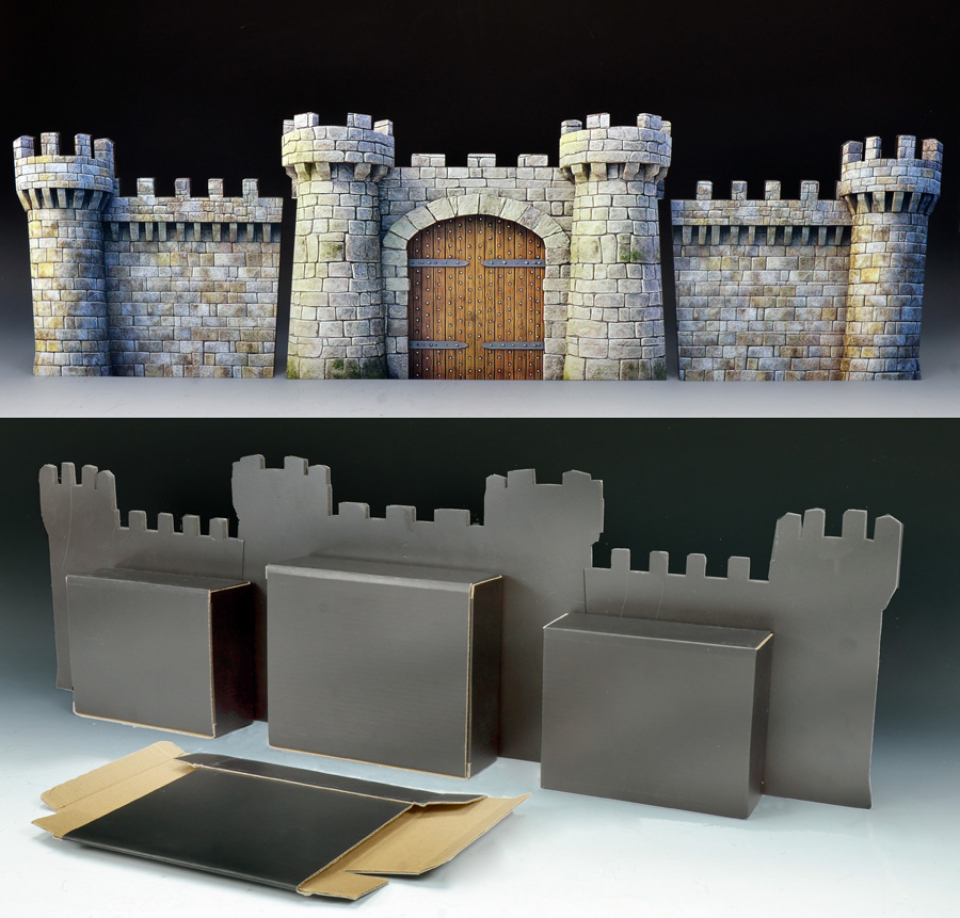 |
And once more, that is the story for July. I hope there’s something for you, if not, there is always August.
In the meantime… All the very best and Happy Collecting!
Andy C. Neilson
Co-founder & Creative Director
King & Country Ltd.
Co-founder & Creative Director
King & Country Ltd.